
You've probably seen the advice already. Take something natural before bed, switch your brain off, sleep through. It's tidy, reassuring, and too simple to be true for those who lie awake replaying the day. Lemon balm for sleep sits right in that gap between a comforting promise and a more complicated reality. It may suit a gentle evening routine focused on relaxation, but that's not the same as a proven cure for insomnia, and knowing the difference helps you choose well and spend wisely.
Table of Contents
- Why Lemon Balm Sleep Claims Need Context
- Understanding Lemon Balm and Its Traditional Role
- What the Sleep Research Actually Shows
- Why Lemon Balm Preparations Are Not Interchangeable
- How to Choose and Use a Lemon Balm Sleep Product
- Choosing Between Mild Support and Insomnia Care
- Checking Safety Before Using Lemon Balm
- Making a Realistic Lemon Balm Decision
Why Lemon Balm Sleep Claims Need Context
It's 2 a.m., you're wide awake, and your phone is full of products promising calmer nights by Friday. One says lemon balm, another adds dreamy language about drifting off, and the label sounds settled, almost medical. That confidence is what deserves a second look. In the UK, lemon balm is positioned primarily as a traditional herbal medicine rather than a clinically established insomnia treatment, as explained in the Camden Medicals summary of lemon balm evidence. That summary also notes that NICE's chronic insomnia pathway prioritises sleep hygiene and cognitive behavioural therapy for insomnia, rather than lemon balm.
The Assumption Worth Challenging
The popular assumption is simple. If a product is sold for sleep, it must have been proven to treat poor sleep. That's not how traditional herbal registration works, and it's not how the lemon balm evidence reads.
Think of two different nights. On one, you're tense after a difficult day and struggle to unwind. On another, you've had broken sleep for months, you dread bedtime, and you're exhausted at work. Lemon balm belongs, at most, in a conversation about the first kind of night. It doesn't belong as a substitute for assessment of the second.
A product that may support relaxation isn't automatically a treatment for persistent insomnia. The label, the preparation and your pattern of sleep all matter.
Four Questions That Change the Decision
- What's the actual problem: Is this occasional restlessness linked to mild tension, or a recurring pattern affecting your days?
- What's in the product: Is it tea, powdered leaf, a tincture, a concentrated extract, or a blend with other herbs?
- What does the dose match: Does the research behind the claim use the same form and amount you're buying?
- What's safe for you: Do you take medicines that cause drowsiness, or have health circumstances that need a pharmacist's input?
Those questions cut through a lot of marketing fog. They also protect you from common misunderstandings about what poor sleep means and what fixes it, a theme explored helpfully in this overview of sleep myths for pain patients. When you shop with context, lemon balm becomes a considered option for a calmer wind-down, not a leap of faith bought at midnight.
Understanding Lemon Balm and Its Traditional Role
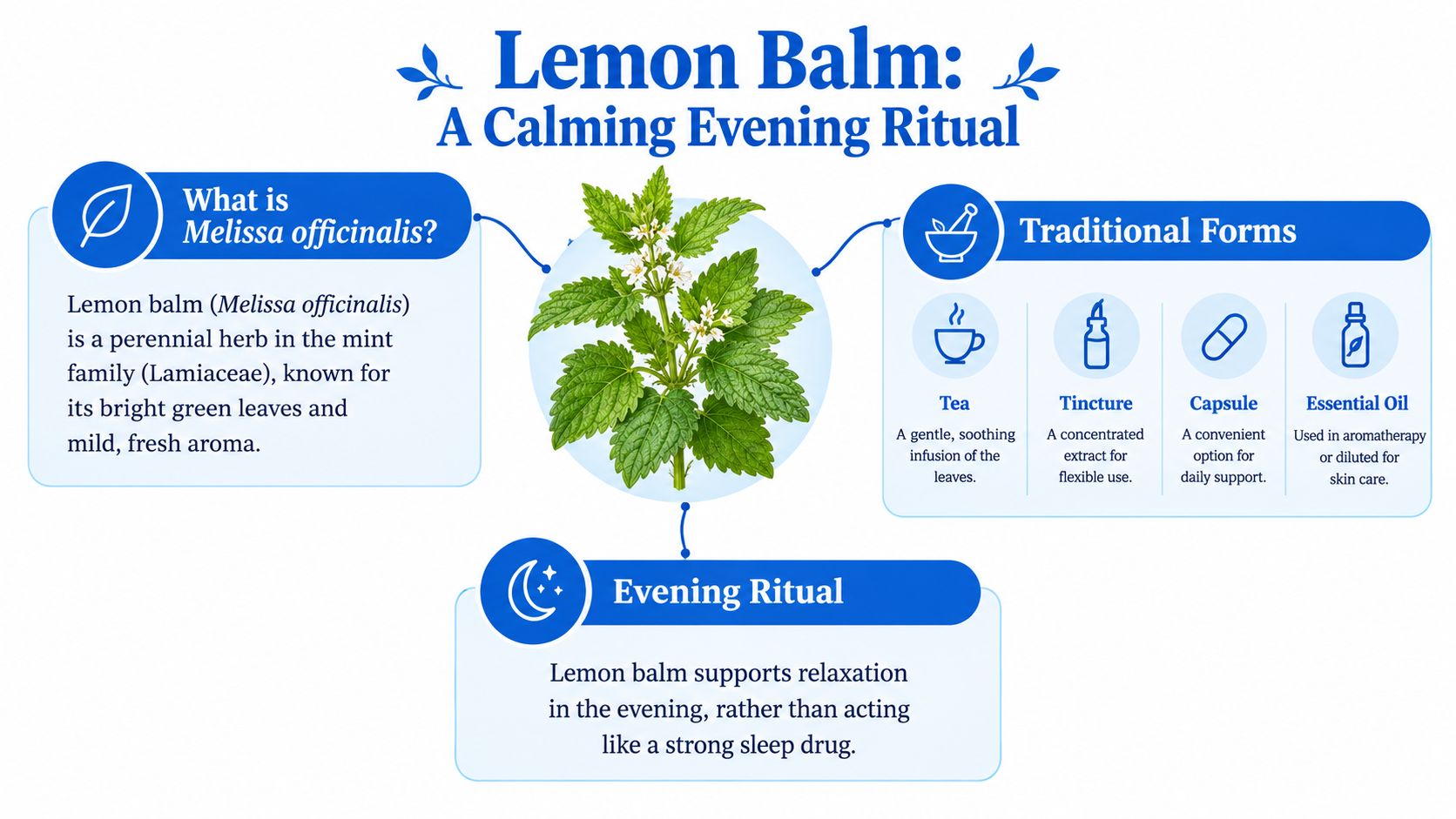
Lemon balm is Melissa officinalis, a herb with a long history of use in Europe as herbal tea, powdered herb, and aqueous or ethanolic extracts for relieving mild mental stress and helping with sleep. That history is real, and it's the reason lemon balm keeps appearing in evening teas and relaxation blends. But a long history answers a different question from the one modern shoppers usually ask. It tells you people have used it for generations. It doesn't tell you that every product works, or that it works as well as a proven insomnia treatment.
Traditional Use in Plain Language
The European Medicines Agency classifies lemon balm leaf as a traditional herbal medicine that may be used to relieve mild mental stress symptoms and aid sleep, while stating that available clinical trials are insufficient for firm conclusions, as set out on the EMA page for Melissae folium. Its position rests mainly on plausible traditional use documented for at least 30 years, including 15 years in the EU, according to that same EMA page.
Here's a simple mental model. Traditional use can justify trying a mild, complementary option for the right situation. It cannot establish equivalence to prescription hypnotics or to structured insomnia therapy.
Why the Form Changes the Story
A cup of tea before bed is partly about ritual. Warm drink, lights down, phone away. A concentrated capsule is a different proposition, with a defined extract and dose. A tincture sits somewhere else again, and a blend with other herbs adds further variables.
That matters because extract concentration, dose, formulation and combination ingredients can materially change what any study result means for you. If stress is the main thread running through your sleepless nights, it's worth reading more about lemon balm for stress and what to know before you buy so you can match the product to the problem you're trying to ease.
- Tea and powdered leaf: Gentler, ritual led, harder to compare with extract trials.
- Capsules and standardised extracts: More defined doses, closer to some study designs, still product specific.
- Combination formulas: Useful for some routines, but you can't credit lemon balm alone for any effect.
Seen this way, lemon balm for sleep is best framed as a calming evening ritual with a traditional basis. That's a genuine benefit for the right person at the right moment. It's just not a drug strength promise.
What the Sleep Research Actually Shows
The research is more interesting than pure folklore, and less settled than many product pages suggest. A 2024 double-blind, placebo-controlled crossover study enrolled 30 adults who used a standardised lemon balm extract at 400 mg daily, with two weeks on each treatment period, as reported in the Wellgard evidence summary on lemon balm and sleep. The reported Insomnia Severity Index score was 6.8 with lemon balm compared with 9.7 with placebo, with a reported p-value of 0.003, and 87% of participants reported improved sleep during the lemon balm phase versus 30% during placebo, according to that same summary.
Those numbers sound strong. Now add the context that changes how much weight they can carry. The study was small, the treatment periods were short, the findings apply to one specific preparation, and some investigators were connected with the extract manufacturer. None of that makes the result worthless. It does mean you shouldn't transfer it to a supermarket tea or an unrelated capsule.
What the Key Sleep Studies Tell Shoppers
| Study | Design | Reported Finding | Key Limitation |
|---|---|---|---|
| 2024 crossover study | Double-blind, placebo-controlled, 30 adults, two weeks per period | ISI 6.8 on lemon balm versus 9.7 on placebo | Small, short, preparation specific, manufacturer links |
| EMA described volunteer study | Prospective, single-centre, open-label, 20 stressed volunteers, 600 mg per day for 15 days | Insufficient evidence to establish reliable clinical efficacy | Open-label design, no conventional clinical safety data |
| Registered 108 person trial | Randomised, double-blind, 300 mg nightly for four weeks | Protocol only, outcomes planned but not proof of benefit | A trial design isn't a result |
The EMA described study in the middle row involved 20 stressed volunteers with mild-to-moderate anxiety and sleep disturbances taking 600 mg per day of a standardised extract for 15 days, and it didn't provide sufficient evidence to establish reliable clinical efficacy. The registered trial planned to enrol 108 adults with mild sleep problems on 300 mg nightly for four weeks, measuring sleep, mood, anxiety, stress, quality of life and wellbeing, as described in the ClinicalTrials.gov record for the lemon balm sleep study.
Reading the Evidence Like a Shopper
Notice what's consistent. Researchers keep studying mild sleep problems, specific extracts and short timeframes. That's a clue about where lemon balm plausibly fits, alongside broader habits that support sleep naturally, such as the routines covered in this hormone-friendly sleep advice from Axelrad Clinic.
Practical rule: Treat one positive result as a reason for cautious interest in that type of preparation, never as a guarantee for every lemon balm product on the shelf.
That caution is good news for buyers. It points you towards clearly labelled, standardised products used for mild, stress linked difficulty, and away from vague blends borrowing credibility from studies they don't resemble.
Why Lemon Balm Preparations Are Not Interchangeable
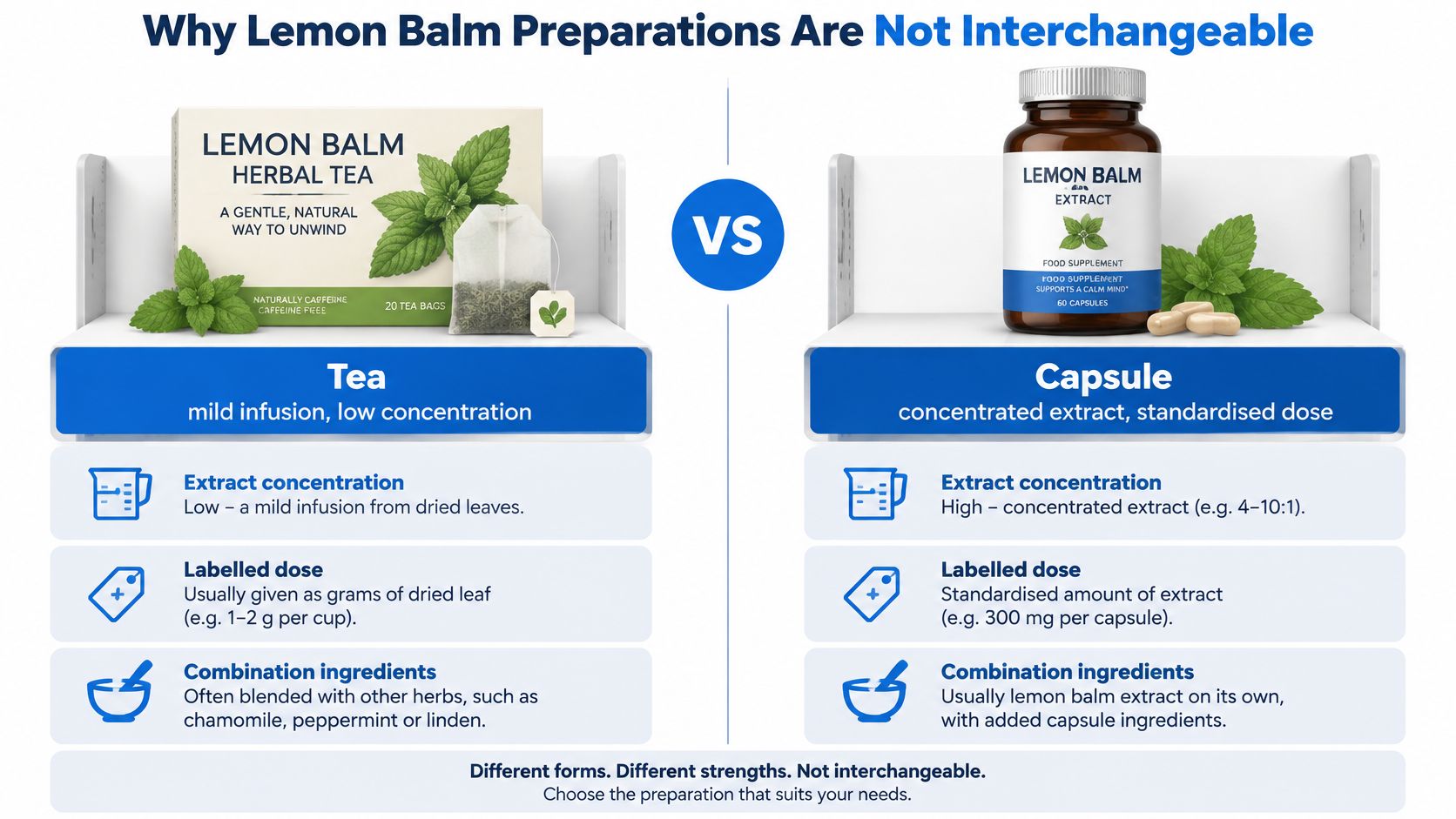
Walk down a health store aisle and you'll see the same plant name on very different products. A soothing tea for the evening. A high strength capsule. A tincture with dropper directions. A sleep blend where lemon balm is one ingredient among several. The shared name creates an illusion of sameness, and that illusion is where shoppers waste money.
Five Label Variables That Matter
- Format: Tea, powdered leaf, tincture and capsule deliver the herb in very different ways.
- Extract concentration: A concentrated extract isn't comparable to a mild infusion by plant name alone.
- Labelled dose: The amount per serving determines whether a study is even roughly relevant.
- Combination ingredients: Blends make it impossible to attribute any effect to lemon balm alone.
- Extraction method: EMA reviewed volunteer studies used a methanol extract not covered by the traditional use monograph, so results can't automatically transfer to other preparations.
Why Results Point in Different Directions
Contrasting findings make this concrete. A review hosted by the University of Reading reports that healthy adults with mild sleep problems found no significant improvement in self-reported sleep quality with 240 mg lemon balm plus 360 mg valerian daily for 30 days versus placebo, as detailed in the University of Reading hosted review of lemon balm evidence. That same review describes a 40-person study where 240 mg of lemon balm was associated with better sleep quality, longer sleep, faster sleep onset and fewer night-time awakenings over two weeks.
Same herb, different products, different outcomes. That's not a contradiction to panic about. It's exactly what you'd expect when dose, companions and duration change.
For you, the benefit of understanding this is control. You stop asking whether lemon balm works in the abstract, and start asking whether this product, at this dose, in this form, resembles anything studied. A well chosen, clearly standardised product gives you a fair test of whether a calmer evening routine helps your sleep. A vague one gives you nothing to learn from, even if you sleep better or worse that week.
How to Choose and Use a Lemon Balm Sleep Product
Start with the shelf test. Pick up the product and see whether you can answer basic questions from the label alone. If you can't, that uncertainty is information in itself.
A Label Reading Routine That Takes Two Minutes
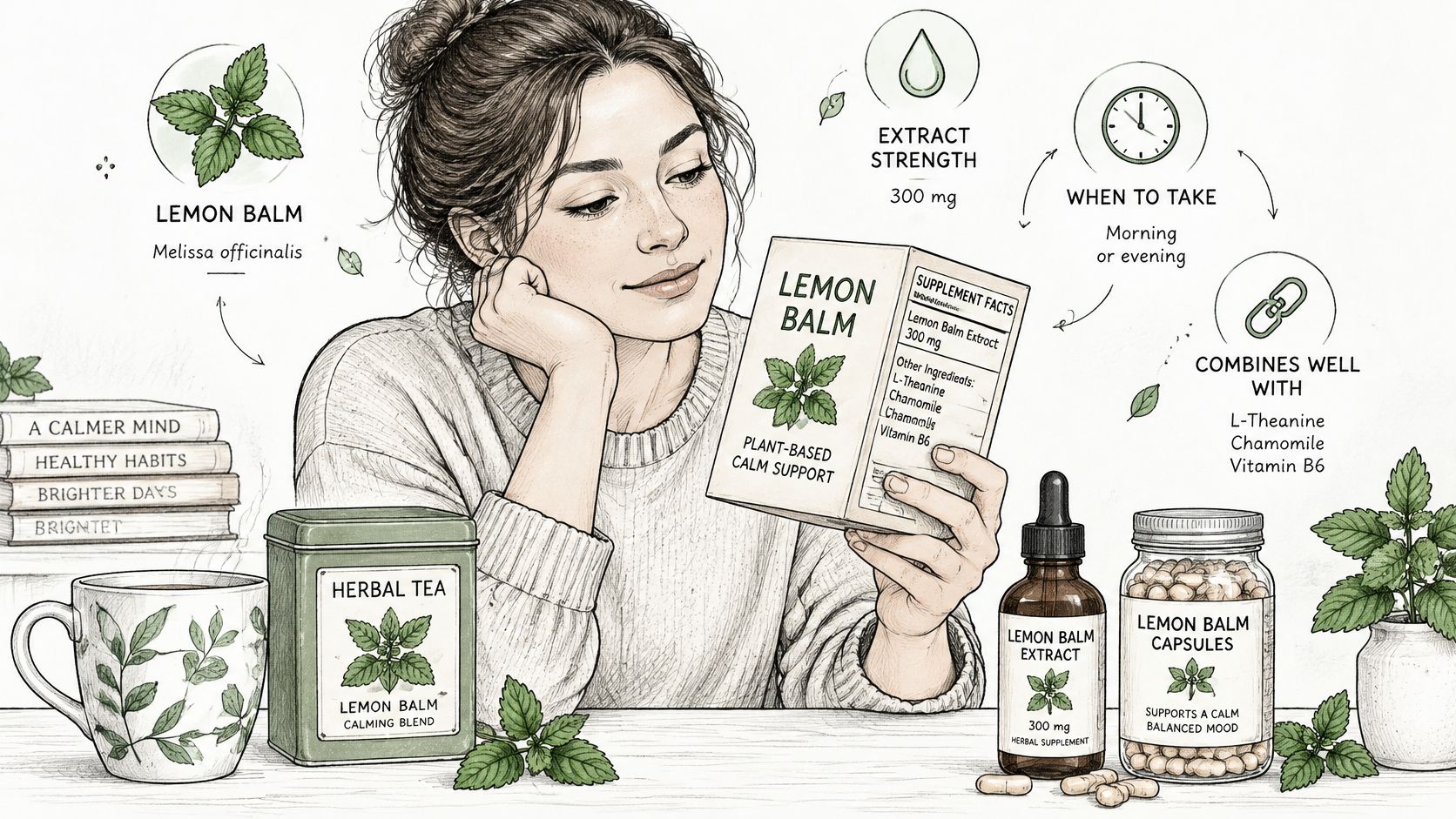
- Name the active ingredient: Confirm it's Melissa officinalis and note which part of the plant is used.
- Check the amount: Look for extract strength and dose per serving, not just capsule count or flavour claims.
- Read the full formula: Identify other herbs or nutrients, because blends change both effect and safety checks.
- Follow the directions exactly: Use the manufacturer's UK label dose and stated duration rather than borrowing doses from studies or forums.
- Read the warnings before the benefits: Drowsiness cautions and medicine interactions belong in your decision, not after it.
What the THR Mark Does and Doesn't Tell You
In the UK, a herbal product marketed as a traditional herbal medicinal product must obtain Traditional Herbal Registration and meet quality and safety requirements, with authorised products carrying the THR logo, as explained by the British Herbal Medicine Association page on lemon balm. For lemon balm, registered products are traditionally used for temporary relief of stress related symptoms such as mild anxiety, based on traditional use rather than proof from modern clinical trials. Marketing must include wording such as based on traditional use only, and registration itself mustn't be presented as clinical trial evidence.
That makes the THR mark useful. It helps you distinguish a regulated traditional herbal medicine from an unregistered supplement, which is a quality and accountability benefit worth paying attention to. It still doesn't promise you'll sleep through the night.
Different routines also raise different questions. A morning tea for general calm isn't a bedtime intervention. A concentrated capsule taken nightly needs stricter medicine checks. A combination formula needs you to review every ingredient, not just the headline herb.
This short video walks through how to build lemon balm into an evening routine sensibly, and it's worth watching before you decide on a format.
If the label leaves you unsure, don't escalate the dose to compensate. Ask for individual guidance, compare options side by side, and choose the product you can use consistently and safely as part of a steadier wind-down. Consistency is where a gentle ritual earns its keep.
Choosing Between Mild Support and Insomnia Care
Around one-third of people in the UK are estimated to experience insomnia, while chronic insomnia, defined as symptoms at least three nights weekly for more than three months, affects roughly one in ten people, according to figures cited in the Medway annual public health report for 2024 to 2025. Those two groups need different responses, and confusing them helps nobody.
When Mild Support May Be Reasonable
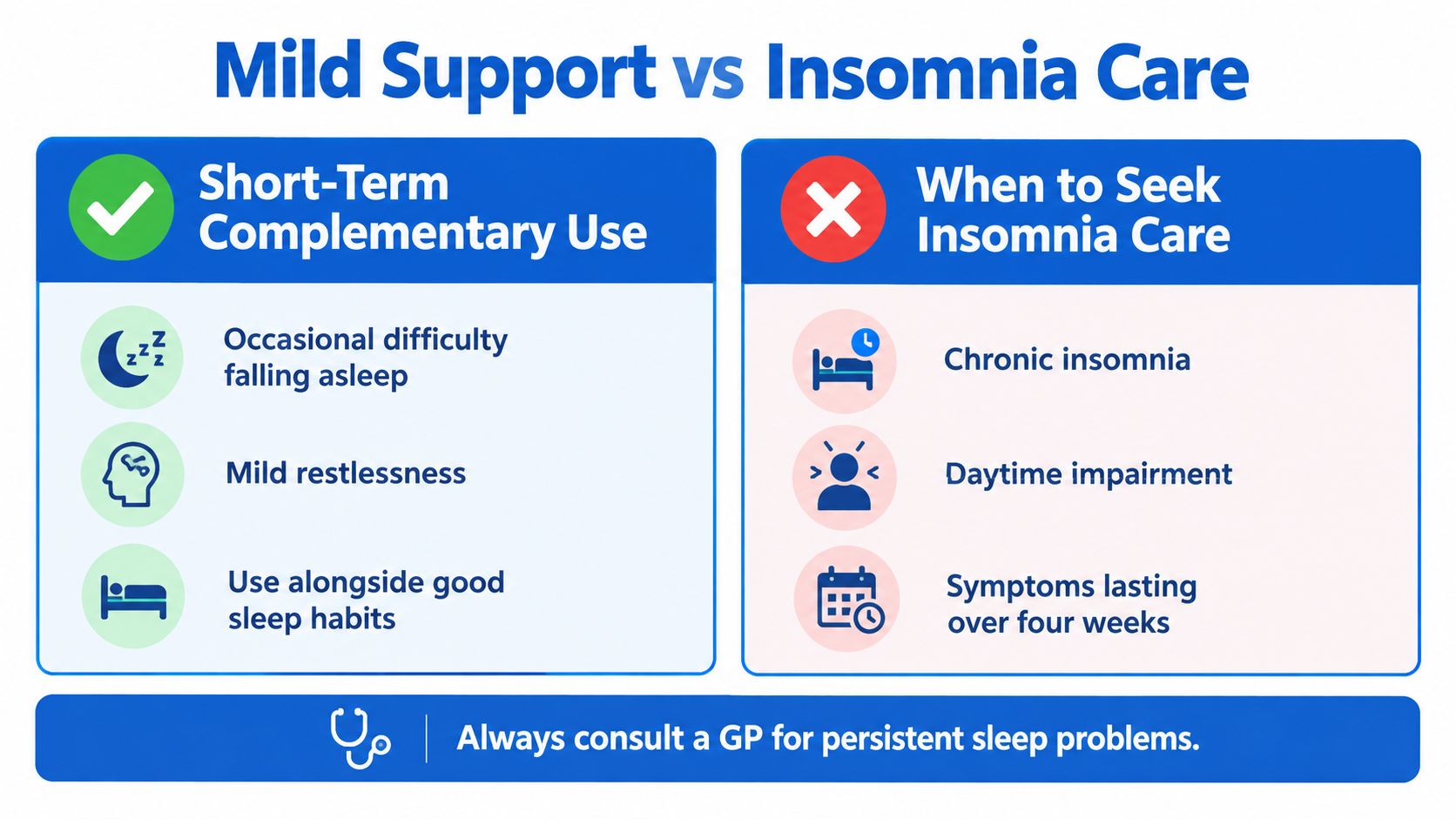
You had a demanding week, your mind is busy at bedtime, and you want a gentler transition into sleep. In that setting, a clearly labelled lemon balm product used short term alongside a consistent wind-down can be a reasonable, low key choice. Regular wake time, dimmer light, no doomscrolling in bed, a warm drink or a capsule as directed. The product supports the routine. It isn't the routine.
Some people also explore nutrients alongside herbal options, and if that's you, this guide to magnesium for sleep and improving your rest helps you weigh that route with the same evidence aware mindset.
When Insomnia Care Should Take Priority
- Persistence: Sleep problems keep recurring week after week despite sensible habits.
- Daytime impairment: You're struggling to function, concentrate or stay safe on the road.
- Worsening pattern: Nights are getting harder, or anxiety about sleep is growing.
- Possible underlying cause: Pain, mood changes, snoring, restless legs or another condition may be involved.
Don't answer chronic insomnia by doubling doses or stacking sedating products. That's the point where shopping advice ends and clinical assessment begins.
Established care for chronic insomnia prioritises sleep hygiene and cognitive behavioural therapy for insomnia, approaches that retrain the patterns keeping you awake rather than adding another sedating layer. If you want a broader view of structured, non drug approaches, this guide to reclaiming your sleep outlines how professional support can fit together. Using lemon balm well means knowing where its lane ends.
Checking Safety Before Using Lemon Balm
Safety checks sound dull until you're groggy on a morning drive. The EMA notes that lemon balm may theoretically cause drowsiness, with risk potentially increased by alcohol or other sedatives, while conventional clinical safety data remain limited, as set out in the EMA final assessment report on Melissa officinalis leaf. That same report found no reliable dose response benchmark for sleep, which is another reason to stick to label directions rather than improvising.
The Drowsiness Audit
Before you buy, list everything else that can make you sleepy. Alcohol in the evening. Prescription hypnotics. Sedating antihistamines. Benzodiazepines, opioids, or any medicine that impairs alertness. Combining lemon balm with these may intensify sleepiness and impair next day alertness, so don't combine them unless a pharmacist or clinician confirms compatibility.
- Driving and machinery: Don't drive or operate machinery if you feel drowsy after taking a sleep oriented product.
- Reported side effects: Headache, nausea, abdominal discomfort, dizziness or sleep disturbance have been reported, so stop and seek advice if you feel worse rather than better.
- Next morning test: Judge a product partly by how clear headed you feel the following day, not only by how quickly you fall asleep.
Circumstances That Need Professional Input First
Available safety information notes a possible interaction with thyroid replacement treatment such as levothyroxine and advises stopping lemon balm at least two weeks before surgery because of potential effects on anaesthesia and other medicines, according to the Rexall natural health article on lemon balm safety. If you're pregnant or breastfeeding, managing thyroid disease, taking regular medicines or preparing for surgery, speak to a qualified UK pharmacist or healthcare professional before choosing a concentrated extract.
That conversation is quick and it protects the benefit you're hoping for. It also fits a wider habit of checking how supplements interact with your overall health, something covered in this overview of supplements, vitamins and kidney health considerations. A calm night isn't a win if it creates a problem elsewhere.
Follow the UK label, avoid alcohol pairings, and treat internet dosage advice as a red flag rather than a shortcut.
Making a Realistic Lemon Balm Decision
Lemon balm has a genuine traditional role for mild mental stress and sleep, and the most encouraging numerical findings come from specific, standardised preparations studied briefly in small groups. The overall clinical evidence remains limited, mixed and highly dependent on product, dose and duration. That combination supports interest, not certainty.
So you have three sensible choices. Consider a clearly labelled product as part of a calm evening routine for mild, stress linked difficulty. Avoid treating any tea, capsule or blend as a guaranteed sleep cure. Or seek professional guidance when sleep problems persist, impair your days, or sit alongside medicines and health conditions.
Chosen with clear eyes, lemon balm for sleep can be a pleasant, gentle addition to your nights. The benefit is a calmer wind-down and a routine you enjoy keeping. Just let the evidence set the expectations, and let your own pattern of sleep decide whether it's enough.
If you'd like help comparing lemon balm teas, capsules and blends against your medicines, routine and sleep goals, the team at Pumpernickel Health Foods offers evidence aware guidance in store in Bedford, by phone and WhatsApp, and through free pre-booked one-to-one consultations. Visit us online or pop into 7 The Arcade, Bedford, and we'll help you choose a clearly labelled product you can use confidently as part of a calmer evening routine.