
You've got a multivitamin beside the kettle, a vitamin D tablet for winter and an immune-support formula you bought when everyone around you started coughing. Each purchase made sense. Now you're looking at the bottles and wondering, can you take too many vitamins? Yes, you can, but the sensible next move is a label check, not a panic-driven internet search.
Table of Contents
- When a Helpful Habit Becomes Too Much
- Understanding Tolerable Upper Levels
- The Vitamins and Minerals That Carry Real Risk
- Why Legal Does Not Always Mean Safe
- How to Audit Your Own Supplement Stack
- Symptoms to Watch For and When to Seek Help
- Getting Personal Advice from Pumpernickel
- A Short Safety Checklist Before You Add Anything New
When a Helpful Habit Becomes Too Much
A familiar shopping pattern starts with a straightforward intention: cover the basics. You choose a multivitamin, then add something more targeted because you're concerned about winter, tiredness or your diet. Before long, you're following the directions on several bottles without checking what they contain together.
That's the mistake I'd look for first across a health-store counter. Different product names don't necessarily mean different nutrients. A winter formula and a bone-health supplement may both contribute vitamin D, even though you bought them for separate reasons.
Consider a hypothetical shopper taking a multivitamin, a dedicated vitamin D product and an immune blend. Nothing about that combination proves she has taken a harmful amount. But if every product supplies vitamin D, she needs to check the combined daily intake before deciding the routine is suitable.
Look at ingredients before adding another bottle
The useful question isn't whether the packaging looks reassuring. It's whether the products fit together.
- Start with your existing routine. Include products you take occasionally as well as those you take every morning.
- Separate your goals from the ingredients. Immunity, energy and bone health are shopping categories, not proof that formulas won't overlap.
- Bring the actual labels. A product name alone doesn't tell an adviser the dose, serving size or ingredients.
A supplement can be a convenient way to follow an agreed nutritional plan. The benefit disappears if you keep adding products without understanding what the original one already provides. I'd rather help you choose a manageable routine than encourage a cupboard full of nearly identical formulas.
Practical rule: Before buying a top-up, check whether you're already taking the nutrient you want to add.
Some nutrients need particular attention because excess can cause harm. Others raise questions about tolerability, medical circumstances or whether you need them at all. Either way, a free one-to-one label consultation can provide a useful second pair of eyes, with a pharmacist handling medication questions and clinical concerns.
This isn't an argument against supplements. It's an argument against taking them blindly.
Understanding Tolerable Upper Levels
A recommended intake and a tolerable upper level do different jobs. The recommended amount helps guide everyday nutritional intake. The upper level is a safety boundary, not a stronger version of the recommendation and certainly not a target to aim for.
Think of a daily spending budget. You don't assess affordability by checking each shopping receipt separately. You add the spending together, because several individually reasonable purchases can exceed your budget.
For vitamin D, the UK Scientific Advisory Committee on Nutrition endorses an adult tolerable upper level of 100 micrograms (4,000 IU) daily, while the usual recommended intake is 10 micrograms daily for adults and children over one year, according to NHS Wales vitamin and mineral guidance. That difference is why a higher-strength product shouldn't automatically look like better value.
Use the limit as a boundary, not a goal
A label's percentage of a nutrient reference value doesn't answer every safety question. Look for the actual amount in the stated daily serving, then check which guidance applies to your age and circumstances.
The upper level concerns total daily intake from relevant sources, not permission to take that amount from every bottle.
The diagram distinguishes the intake recommendation from the upper boundary.
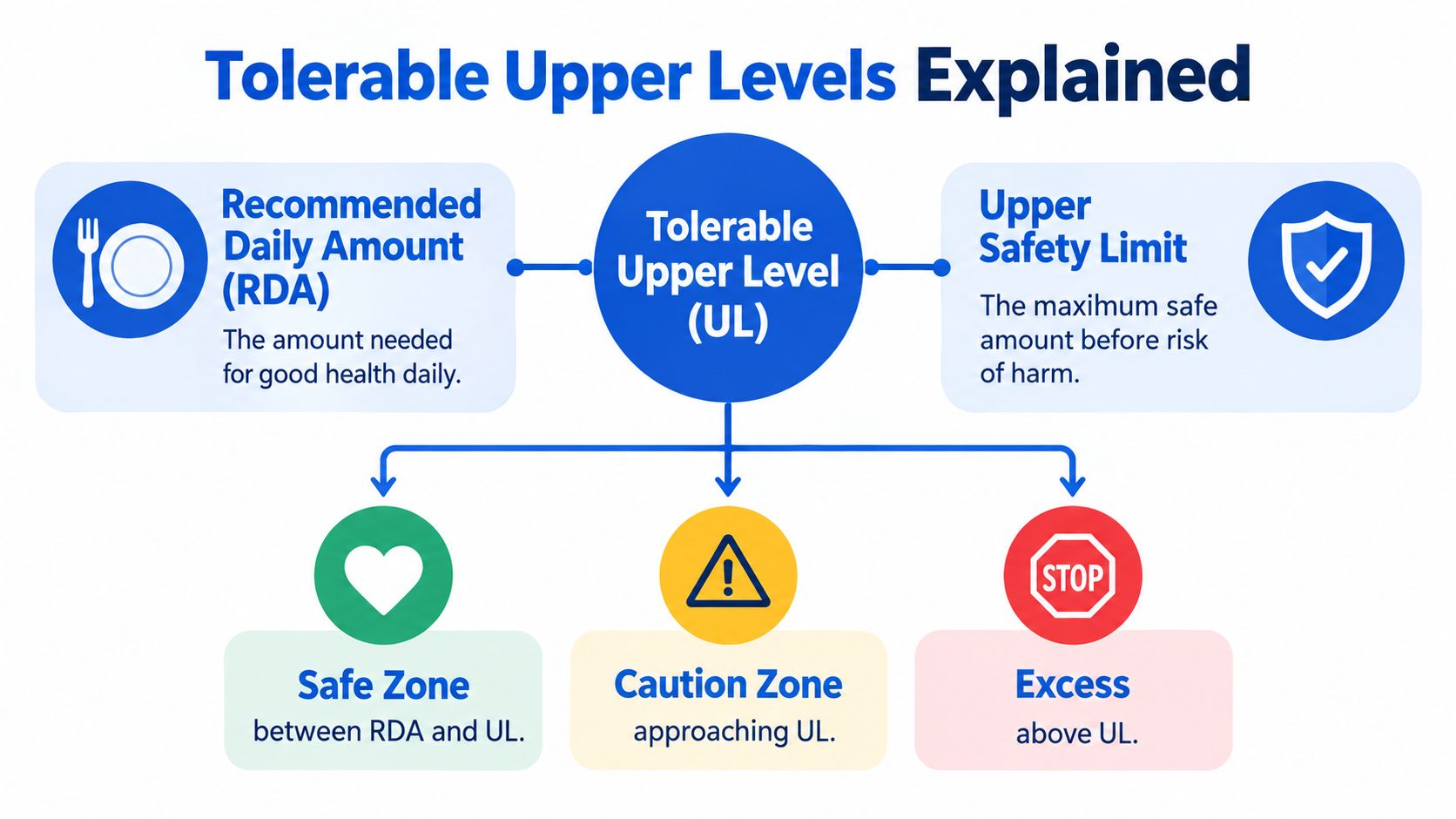
Don't read the space between those boundaries as a recommended dosing range. Your appropriate intake may depend on advice that's more specific than a general diagram.
Fat-soluble vitamins, including A, D, E and K, can be stored in the body. Water-soluble vitamins, including the B vitamins and C, are generally excreted more readily, but that distinction isn't a licence to take unrestricted amounts. Ask about the individual nutrient rather than relying on the idea that your body will remove anything extra.
Mineral combinations deserve a separate check too. If you're reviewing those, NexiHerb LLC's resource on copper forms and zinc interactions is supplementary reading to discuss with your pharmacist, not a substitute for personalised dosing advice.
The Vitamins and Minerals That Carry Real Risk
Don't treat every nutrient as though it has the same risk profile. Vitamin D, vitamin A, iron and vitamin C deserve different questions, and their safety guidance shouldn't be squeezed into a single rule.
For a quick reference, the table separates an established upper boundary from a caution threshold. Those aren't interchangeable.
UK Upper Levels and Main Risks at a Glance
| Nutrient | UK Adult Upper Level | Main Risk of Excess | Common Sources That Stack Up |
|---|---|---|---|
| Vitamin D | Adult upper boundary explained above | Excess can cause hypercalcaemia, with potential effects on bones, kidneys and the heart | Multivitamins, dedicated vitamin D products and cod-liver oil |
| Vitamin A | 1.5 milligrams (1,500 micrograms) daily is the NHS combined-intake caution threshold, not a universal toxicity cut-off | Long-term intake above this level may affect bones and increase later fracture risk | Multivitamins, standalone vitamin A and cod-liver oil |
| Iron | Ask a pharmacist for dose-specific advice rather than using a generic figure | Suspected accidental overdose, particularly in children, requires urgent medical advice | Iron tablets and any multivitamin whose label lists iron |
| Vitamin C | The advisory threshold discussed below isn't presented as a universal adult upper level | Mild stomach upset in sensitive individuals | Check multivitamins, vitamin C tablets and immune formulas for overlap |
The vitamin A threshold and long-term bone warning come from NHS Wales guidance on vitamins and minerals. Keep that distinction in mind: a caution about average intake over years isn't a diagnosis of poisoning after an isolated mistake.
Vitamin D and vitamin A need deliberate checking
With vitamin D, don't assume that taking more is a sensible response to every winter-health concern. Check your existing products before choosing a separate tablet, and ask a pharmacist if you've been given a prescribed regimen. Don't change prescribed treatment using an over-the-counter label comparison.
For background reading rather than dosing instructions, the article Vitamin D, more than just a sunshine vitamin offers a starting point for questions to bring to a consultation.
Vitamin A deserves extra caution if you're pregnant or planning pregnancy. The NHS Wales guidance cited above flags the same threshold as inappropriate in pregnancy. Don't choose a general multivitamin on the assumption that every formula is suitable for pregnancy. Get the product checked.
Iron and vitamin C require different responses
With iron, my recommendation is straightforward: don't add it just because you feel tired. Ask a pharmacist or GP whether it's appropriate, and keep iron-containing products securely out of children's reach. If a child may have swallowed iron accidentally, seek urgent medical advice rather than waiting for symptoms.
Vitamin C calls for a more proportionate conversation about dose and digestive tolerance. It shouldn't be dismissed as harmless because it's familiar or water-soluble. Equally, an upset stomach doesn't tell you which ingredient caused it.
The table is a prompt for better questions, not clearance to use every product below a listed threshold. Your medical history, medicines and reasons for supplementing still matter.
Why Legal Does Not Always Mean Safe
A supplement being legally sold doesn't mean every combination is suitable. A retailer can sell a product without knowing what else you take at home. That's why the shelf label can't replace a review of your routine.
The UK Government states that food-supplement rules don't set nationally legislated maximum amounts for every vitamin and mineral. Its voluntary safe-upper-level guidelines draw on the Expert Group on Vitamins and Minerals' 2003 report; the same guidance notes that a small number of products exceed those guidelines and may cause adverse effects, and that vitamin C intake above 1,000 milligrams can cause mild stomach upset in sensitive people, according to the Government nutrition legislation information sheet.
That's a reason to check, not a reason to distrust every bottle on the shelf. It separates the legal status of a product from whether its dose suits you.
Challenge the bigger-dose sales pitch
A high-strength label may look impressive. It still needs to answer a basic question: why do you need that amount?
- Compare suitability, not strength. The largest dose isn't automatically the most useful purchase.
- Ask what you'd replace. A new formula may be an alternative to an existing product rather than an addition.
- Read past the front label. Ingredient amounts and daily serving instructions matter more than words such as maximum or advanced.
The caution illustrated below is about thoughtful selection, not avoiding supplements altogether.
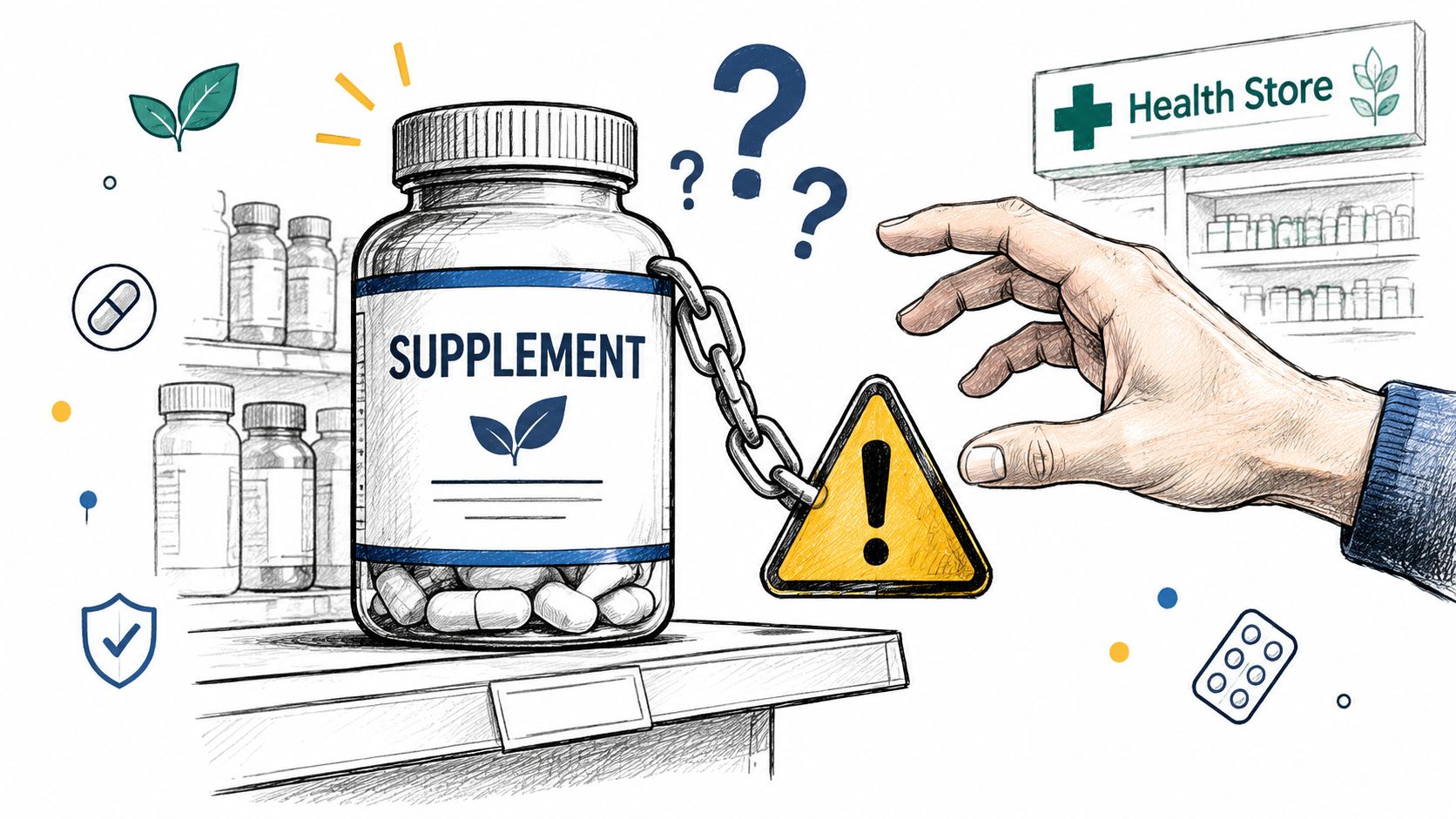
If you have kidney-health concerns, take your proposed routine to a pharmacist or clinician before buying. Reading about supplements, vitamins and kidney health can help you prepare questions, but it can't establish which products are safe for your circumstances.
A reputable shop should welcome those questions. You're not being awkward by asking to see a label or declining a product that duplicates something you already own. You're making a better purchasing decision.
How to Audit Your Own Supplement Stack
Put your products on the kitchen table and open a note on your phone. You don't need a specialist app. You need readable labels, the serving instructions and an honest record of what you take.
Audit the daily serving, not just the capsule. If the label gives amounts for a serving that differs from your actual use, ask an adviser to help reconcile them rather than guessing.
Gather, identify, add and compare
List everything you use. Include capsules, gummies, sprays, effervescent drinks, cod-liver oil and herbal formulas. Don't leave something out because you think of it as a wellness drink rather than a supplement.
Identify repeated nutrients. Read the ingredient panels and mark anything that appears across products. Look especially carefully when different formulas promise similar health support.
Add the relevant daily amounts. Keep units consistent. If one label uses milligrams and another uses micrograms or IU, get help with the conversion before comparing the figures.
Check the appropriate guidance. Use advice for the person taking the supplement, not whichever adult figure appears first in a search result. Take any uncertainty to a pharmacist.
The NHS gives a particularly useful example for children: don't give cod-liver oil and vitamin drops together, because cod-liver oil already contains vitamins A and D, according to NHS advice on vitamins for children. It also advises following the label and checking for repeated nutrients.
The visual checklist adds the professional review that should follow any unresolved calculation.
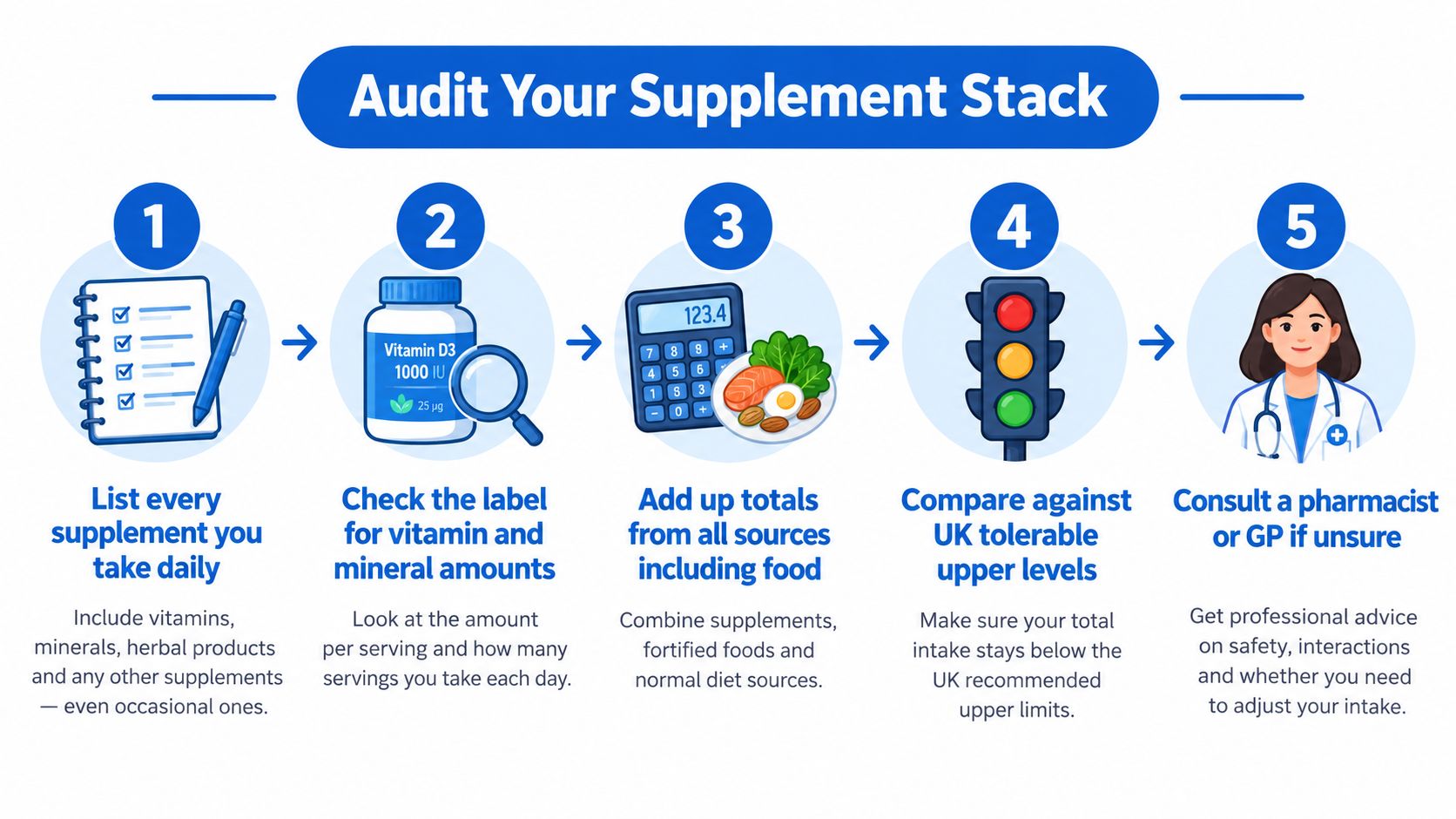
Include fortified foods without guessing
Check the labels on plant-based drinks, breakfast cereals and margarines you regularly use. Only count added nutrients that the label lists, and use your usual portion rather than assuming every product is fortified in the same way.
A useful note might have columns for product, daily serving, nutrient amount and combined total. Leave unclear entries marked for review; a blank you ask about is safer than an invented figure.
Before ordering replacements, use these tips for buying natural supplements online alongside your audit. Choose a product whose ingredient panel you can read before purchase.
Repeat the check whenever you change your routine. A saved list makes that easier and gives your pharmacist something concrete to review.
Symptoms to Watch For and When to Seek Help
If you think you've taken too much, get advice based on the product and amount, not a symptom checklist alone. Keep the packaging and note what you took and when. Don't take another non-prescribed dose while you're seeking advice.
Use the chart as a reminder to seek help, not as a way to diagnose an overdose.
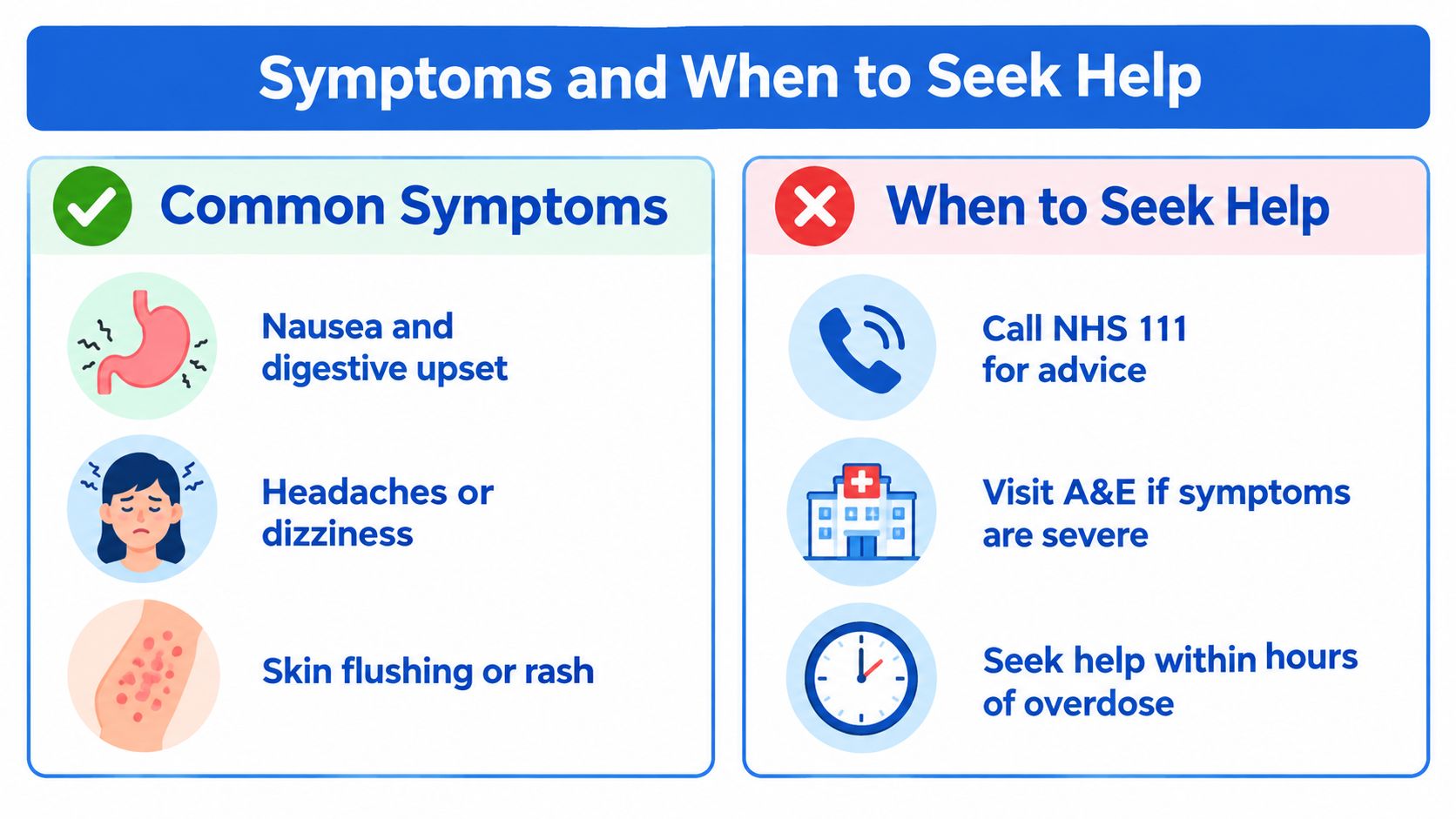
Match the response to the situation
- Mild digestive symptoms without suspected overdose. Ask a pharmacist to review the product and seek GP advice if symptoms persist. Don't assume nausea or looser stools will resolve or that a vitamin caused them.
- A possible excessive dose or uncertain amount. Contact NHS 111 promptly, even if you currently feel well. For ongoing symptoms or a repeated dosing mistake, seek same-day clinical advice.
- Severe symptoms. Persistent vomiting, confusion, extreme drowsiness, an irregular heartbeat, severe headache or marked dehydration warrant urgent assessment. Use A&E, and call emergency services if someone is seriously unwell or can't travel safely.
For children, don't wait for symptoms after suspected accidental iron ingestion. Seek urgent help and take the packaging with you.
The Government warns that vitamin D intake above 100 micrograms (4,000 IU) daily can cause hypercalcaemia, an abnormally high blood calcium concentration that may weaken bones and damage the kidneys and heart, in its vitamin D fortification summary. Symptoms alone can't confirm or exclude that problem.
The video below is supplementary viewing, not emergency advice.
For routine questions about mineral combinations, Peak Performance's guide for supplement users is reading to discuss with a pharmacist after any immediate concern has been addressed. Neither online reading nor a store consultation replaces clinical care.
Getting Personal Advice from Pumpernickel
A useful consultation starts with what's already in your cupboard, not what someone wants to sell you. Bring your bottles or clear photographs of the labels, your usual serving amounts and a list of prescription medicines. Explain what you want help with and what's worrying you.
Free, pre-booked one-to-one consultations are available at the Bedford Arcade store. You can also ask for advice by phone on 01234 348179 or through WhatsApp. These are practical routes for checking labels and narrowing choices, with medical questions referred to a pharmacist or GP.
Choose a product that fits the routine
The curated range includes NaturesPlus, Lamberts, HealthAid, Lifeplan, BioCare, BetterYou, Optibac Probiotics, Natures Aid, Pharma Nord and A. Vogel, selected with ingredient quality and supplier transparency in mind. Brand choice comes after suitability, not before it.
Products such as Source of Life Gold and Viridian High Five Multivitamin are options to compare for everyday nutritional coverage. Their appeal is the convenience of a clear daily routine, but neither should automatically sit alongside several other broad-spectrum formulas.
A worthwhile recommendation may be to replace a product, simplify your routine or buy nothing until a pharmacist has checked it.
- Choose your priority. Online categories include immunity, joints, sleep, menopause, men's health and digestion.
- Ask about overlap. A category match doesn't prove a formula complements everything you already take.
- Choose a usable format. Discuss tablets, capsules or other options you'll be comfortable following correctly.
Pregnancy, children, prescription medicines and complex health concerns deserve professional review before a purchase. The best outcome is a short, understandable routine that matches your needs, not a fuller basket.
A Short Safety Checklist Before You Add Anything New
Before adding another supplement, make these habits routine:
- Know the relevant guidance. Check the nutrient and the person taking it.
- Write down your current products. Include occasional use and fortified foods where relevant.
- Compare combined amounts. Don't assess bottles in isolation.
- Ask before adding. Get professional advice for pregnancy, medicines and children.
- Seek help early. Suspected overdose or concerning symptoms need clinical advice, not shopping advice.
Bring your labels to the Bedford store, call the team or ask online if you need another pair of eyes. You don't need to have the arithmetic solved before asking.
Pumpernickel Health Foods offers a curated supplement range and free, pre-booked consultations to help you choose products without unnecessary overlap. Visit Pumpernickel Health Foods, or call 01234 348179 with your labels to hand, and ask for help building a simpler, well-matched routine.
Generated with Outrank