
Zinc is an essential trace mineral, but it's easy to think about it only when a cold-season display catches your eye or you're adding an immune-support tablet to your basket. Before you do, it helps to know what zinc does, whether your diet is likely to provide enough, and how to avoid taking more than you need.
The benefits of zinc come from its everyday role in normal body processes, not from acting like a quick energy boost. Here's a practical UK-focused guide to the mineral, food sources, signs that deserve attention, and the label checks that matter if you're considering a supplement.
Table of Contents
- Why Zinc Matters in Everyday Health
- How Zinc Works Inside the Body
- Key Benefits of Zinc for Immunity, Skin and Healing
- Getting Zinc From Food First
- Signs That Your Intake May Be Too Low
- Dose Stacking and the Copper Trade-Off
- Choosing a Zinc Supplement That Suits You
Why Zinc Matters in Everyday Health
Zinc is an essential trace mineral. Your body needs it in small amounts, but it uses it across a wide range of enzyme and protein functions that support normal metabolism and the maintenance of tissues. That makes zinc a basic part of everyday nutrition, not a trendy add-on reserved for winter.
You might be looking at a bottle because the seasons are changing, or because zinc appears alongside familiar nutrients such as vitamin C and vitamin D in an immune formula. The useful first step is to separate zinc's role in normal health from promises of a guaranteed boost. It contributes to ordinary immune and cellular processes, but taking extra doesn't automatically mean you'll feel better.
UK dietary reference values offer a guide to daily intake: the recommended nutrient intake is 9.5 mg per day for males aged 15 and over and 7.0 mg per day for females aged 15 and over. The lower reference nutrient intakes are 5.5 mg and 4.0 mg, respectively. These are population reference values, not a personal diagnosis, and UK guidance notes that the evidence behind the values is limited. The UK National Diet and Nutrition Survey describes zinc's regulatory, catalytic and structural roles in enzymes and proteins, as well as its contribution to the metabolism of protein, carbohydrate, fat, nucleic acids and energy.
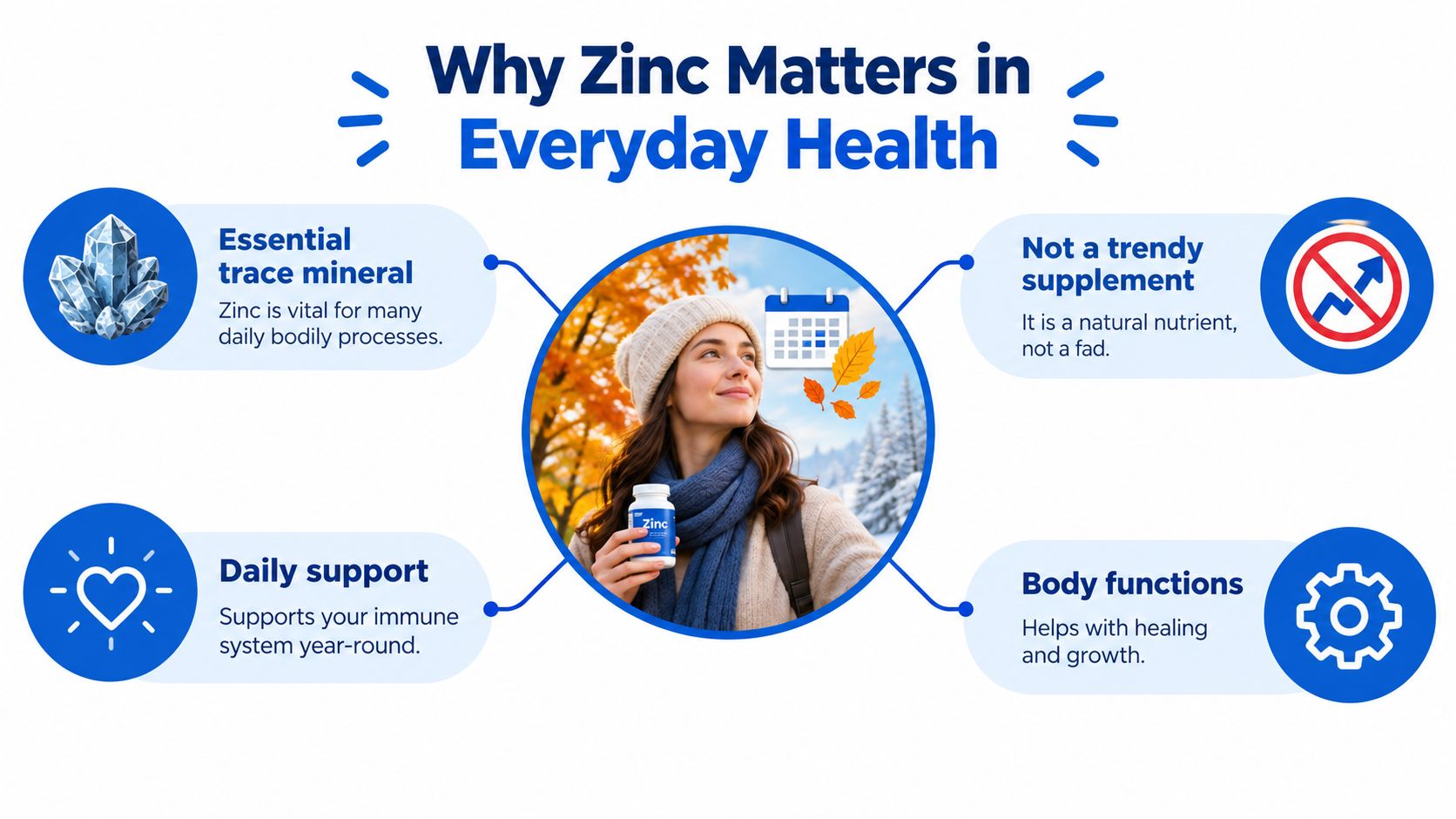
A helpful starting point: Think about zinc as one part of a varied diet. A supplement may help fill a genuine gap, but it doesn't replace meals or establish that a symptom is caused by low zinc.
How Zinc Works Inside the Body
A plain-language way to understand zinc is to picture it as a key. Many enzymes need zinc to carry out their work; without the right components, some of the body's chemical processes can't run as they should. Zinc also has a structural role, helping certain proteins keep the shape they need to function.
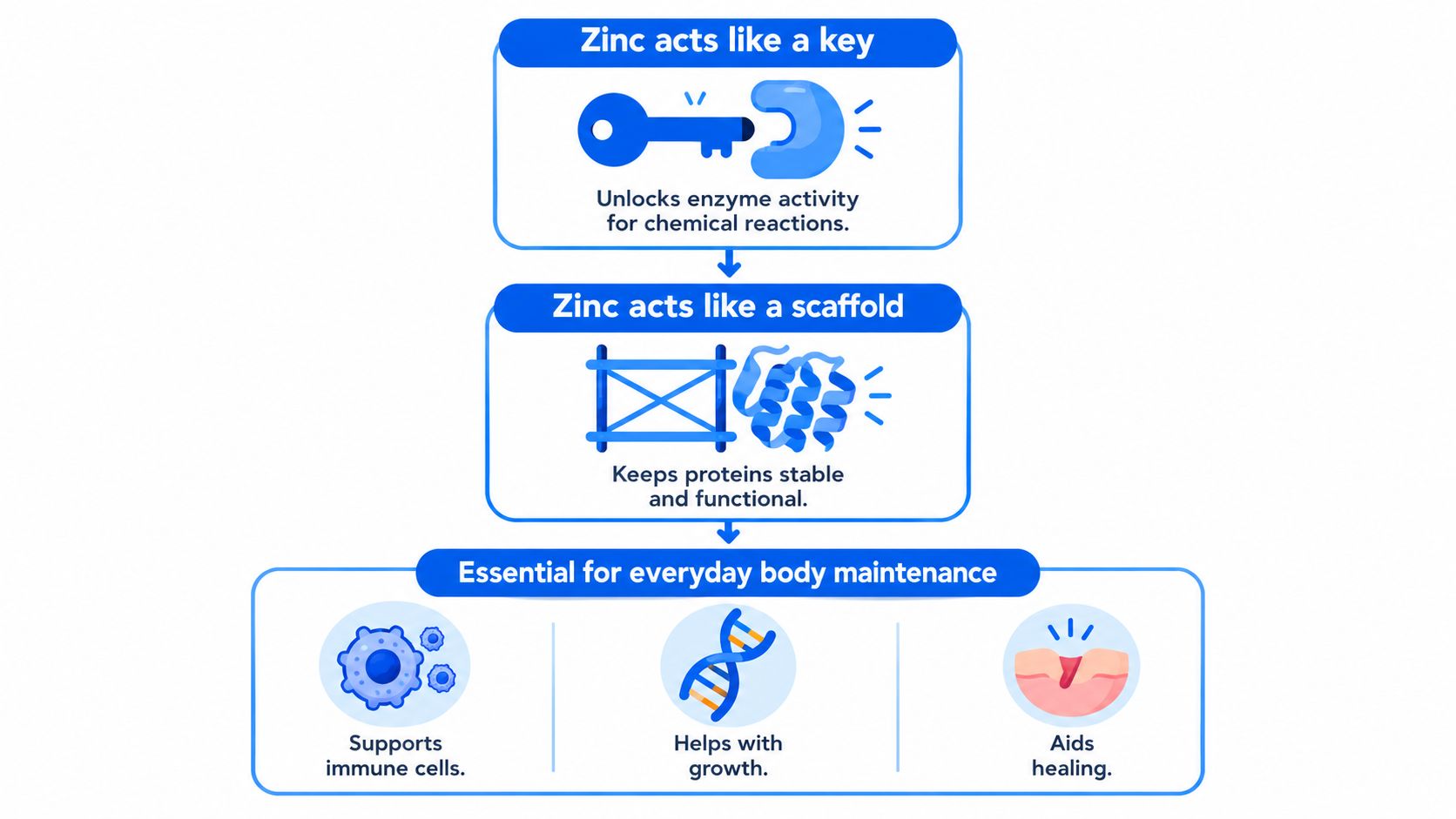
Some of the enzyme names sound technical, but their roles help explain why zinc matters. UK hospital pathology guidance identifies zinc as a cofactor for carbonic anhydrase, alkaline phosphatase and DNA/RNA polymerases. These enzymes take part in processes that support metabolism, the handling of genetic material and the making of new cells. South Tees Hospitals' zinc guidance also notes that inadequate intake, impaired absorption or zinc binding to dietary fibre can contribute to low zinc availability.
That broad involvement connects zinc with cell renewal, tissue repair and normal growth. If you get a minor cut, for instance, the body needs to produce and organise new tissue as it heals. Zinc's role in these processes makes adequate intake relevant, but it doesn't mean that a high-dose tablet will speed healing for everyone.
Zinc also contributes to metabolism, the set of processes through which the body uses nutrients and manages energy. It isn't a stimulant, and it shouldn't be treated like one. Its contribution is quieter: it helps enzymes and proteins do their jobs across many body systems.
Understanding this distinction can prevent a common misunderstanding. A nutrient can be essential without extra intake producing an extra benefit. The sensible aim is adequate zinc intake, with attention to diet and individual circumstances, rather than trying to maximise the dose.
Key Benefits of Zinc for Immunity, Skin and Healing
Zinc contributes to normal immune function, but “immune support” shouldn't be read as a promise that a supplement will prevent every cold or infection. Its role is part of the body's usual defence and maintenance systems. The benefit of correcting an inadequate intake is different from adding more zinc when your diet already provides enough.
Healing and tissue maintenance
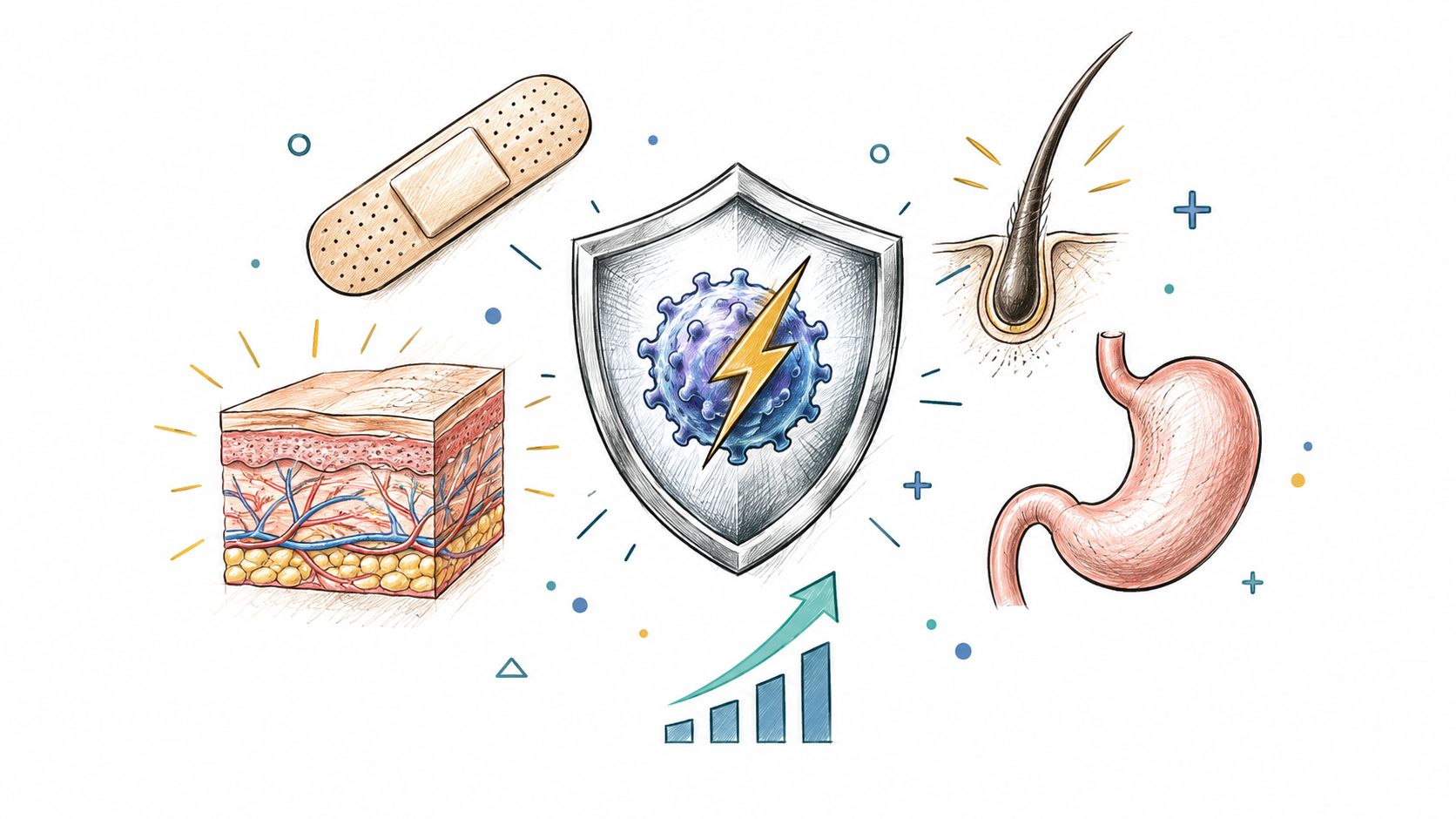
Zinc supports the production of new cells and enzymes, and it contributes to wound healing. If a minor cut seems to be healing slowly, that alone doesn't prove low zinc. But where someone has a genuine deficiency or a risk of inadequate intake, restoring nutritional adequacy may matter for normal tissue repair.
Skin and hair maintenance also depend on the body's wider nutritional and metabolic processes, including those involving zinc. Skin changes or hair thinning can have many causes, so they shouldn't be treated as a reason to start a high-dose supplement without considering the wider picture. For a broader look at supplements and appearance, see this guide to natural supplements and skin health.
Zinc has roles in digestion and the metabolism of nutrients, too. That doesn't make it a general digestive remedy. Ongoing digestive symptoms warrant attention to their cause, especially because some gut conditions can also interfere with nutrient absorption.
For readers exploring a balanced approach to seasonal wellbeing, Yuve's article on supporting your immune system naturally offers another perspective on everyday habits and nutrients. It's best to consider zinc as one element of a varied routine, rather than a stand-alone shield.
The relationship between zinc and these outcomes is grounded in its biological role, but the most meaningful benefit is expected when intake is inadequate. If you're already getting enough, increasing the dose isn't a reliable shortcut to stronger immunity, healthier skin or faster healing.
The video below provides another visual introduction to zinc and its role in the body.
Getting Zinc From Food First
Zinc is already sitting inside foods most British households buy every week. Beef, lamb, shellfish, eggs and dairy all contain it. So do beans, lentils, nuts, seeds and wholegrains. For people eating a reasonably varied diet, food is the sensible place to start before reaching for a supplement.
Animal sources tend to provide zinc the body absorbs more readily. Many plant sources contain phytate, a compound in wholegrains, pulses, nuts and seeds that latches onto zinc in the gut and carries some of it out before it can be absorbed. UK reference values already account for lower availability in phytate-rich diets, so plant-based eaters do not need to avoid these foods. They do benefit from eating a varied mix of them consistently.
To give you a feel for the difference between foods, here are three examples drawn from USDA FoodData Central:
| Food | Typical serving | Approximate zinc |
|---|---|---|
| Oysters | 60 g | Around 7.5 mg |
| Beef | 150 g | Around 4.5 mg |
| Baked beans | 200 g | Around 1.4 mg |
Values shift with the cut, brand and preparation, so treat these as a guide to relative strength rather than a way to tally an exact daily total. The pattern matters more than any single number: shellfish and red meat deliver the most absorbable zinc per serving, while eggs, dairy, nuts, seeds and wholegrains each chip in smaller amounts that add up across the week.
Build a practical day around familiar foods
A UK-friendly day might start with eggs and wholemeal toast, include a lunch of beans or lentils with seeds, and finish with a meal built around lamb or beef, or a plant-based dish with pulses and nuts. Dairy foods can also contribute if they are part of your diet. No single meal needs to do all the work.
Vegetarians, vegans and people eating a restricted range of foods can still build zinc into meals, but consistency matters. Rotate legumes, nuts, seeds and wholegrains, and consider whether your overall diet is varied enough to cover your needs. If you have a health condition that affects digestion or absorption, ask a health professional whether a dietary review or testing is appropriate rather than assuming a supplement is necessary.
Signs That Your Intake May Be Too Low
Slow wound healing, frequent infections, altered taste or smell, hair thinning, skin changes and ongoing tiredness can be reasons to review your health and diet. They are not diagnostic signs of zinc deficiency on their own. Similar symptoms can arise for many reasons, including other nutrient shortfalls, health conditions or stress.
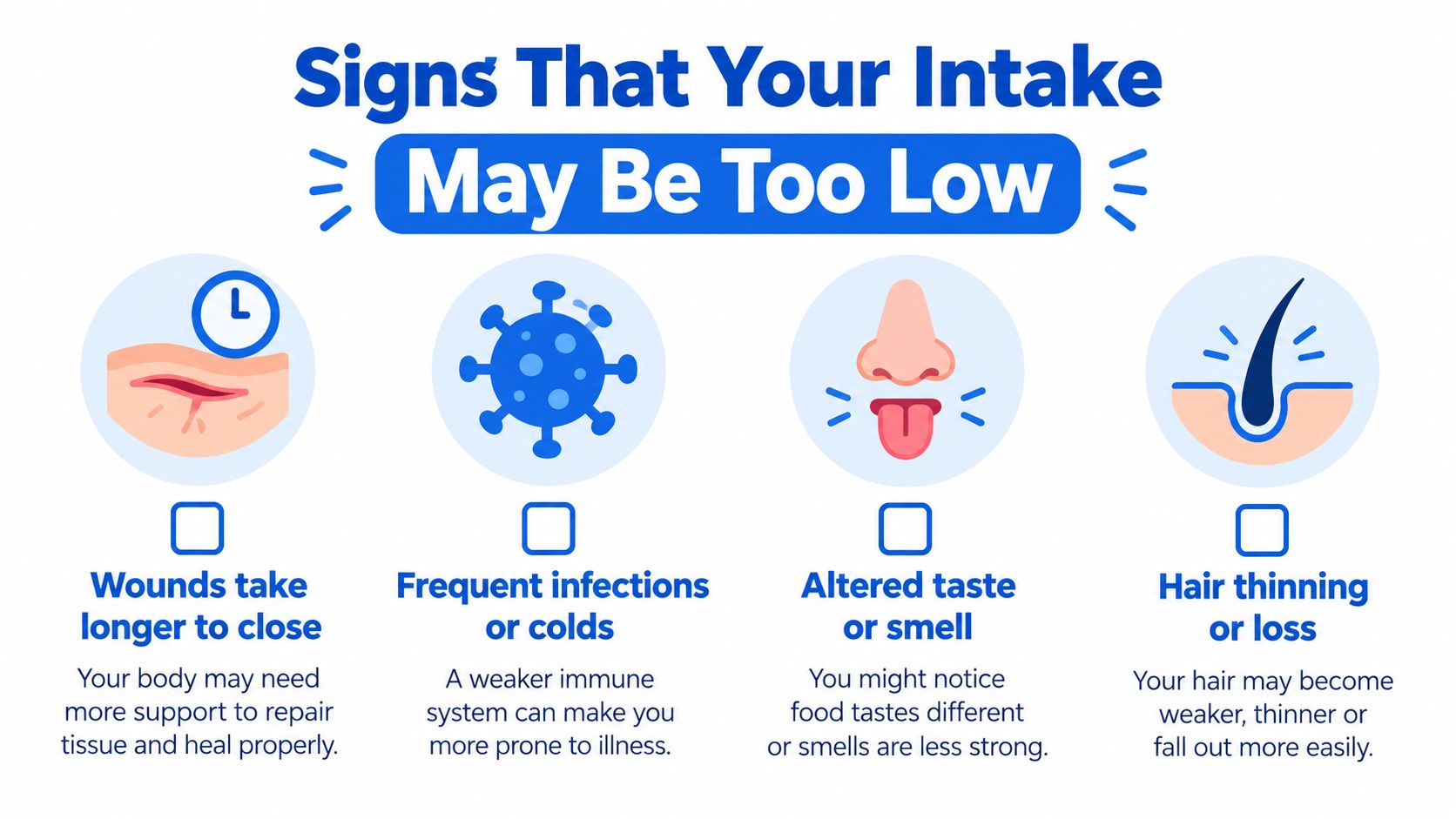
Use symptoms as a prompt, not a verdict
A self-check is most useful when it includes context. Have you been eating a very limited diet? Do you have a digestive condition that may affect absorption? Have the symptoms persisted or become concerning? These questions can help you decide whether to speak with your GP, but they can't confirm the cause.
Persistent fatigue, for example, may relate to low iron, thyroid problems, sleep, stress or other factors. Skin changes and altered taste can also have explanations unrelated to zinc. Starting a supplement may delay finding the actual cause if you rely on it instead of seeking an assessment.
People with restrictive diets, prolonged poor intake, digestive conditions that affect absorption, or other health circumstances may have a stronger reason to ask for professional advice. Older adults and people who drink heavily may also benefit from discussing dietary adequacy with a clinician, particularly if symptoms persist. The point isn't to assume deficiency, but to consider individual risk rather than treating a symptom in isolation.
If you're comparing different approaches to trace minerals, this guide to mineral drops for wellness may help you think about how mineral products fit into a broader routine. It shouldn't replace a clinician's advice where you have ongoing symptoms or a suspected deficiency.
Practical check: Keep a note of what you eat, any supplements you take and the symptoms you've noticed. That gives a GP or dietitian more useful context than a list of symptoms alone.
Dose Stacking and the Copper Trade-Off
Taking a zinc tablet alongside a multivitamin and an immune formula can push your total supplemental intake higher than you expect. The label on one bottle shows only that product's contribution, not the combined amount from everything in your routine. That's why “a bit more” isn't automatically harmless.
NHS guidance advises adults not to exceed 25 mg of zinc per day from supplements unless directed by a doctor. UK guidance on vitamins and minerals warns that high zinc intake can reduce copper absorption, which may contribute to anaemia and weakened bones. The 25 mg advice is about supplements; zinc from food is additional.
A separate upper limit for adults is 40 mg per day from all sources, including food, drinks, supplements and medicines, according to the NIH Office of Dietary Supplements' zinc fact sheet. That source also notes that prolonged intake of 50 mg or more can interfere with copper absorption, reduce immune function and lower HDL cholesterol, and that excess intake may cause nausea, dizziness, headaches, stomach upset, vomiting or loss of appetite. Follow a clinician's instructions if you're taking zinc for a diagnosed medical reason.
Check the whole routine
Imagine a winter basket containing a multivitamin, an immune formula and a standalone zinc product. The practical question isn't just what's in the standalone tablet. Add up the elemental zinc listed on each label, and check cold remedies or other products as well.
- Read each label: Look for the amount of elemental zinc, rather than assuming the weight of a zinc compound is the amount of zinc itself.
- Add overlapping products: Include multivitamins, immune blends and other supplements you take regularly.
- Check duration: A dose suitable for short-term, clinician-guided use isn't automatically appropriate every day indefinitely.
For readers planning mineral intake during pregnancy or other life stages, these prenatal mineral balance tips may offer useful background. If you're unsure how several products fit together, review the labels with a practitioner; this guide to taking too many vitamins also explains why combining products deserves care.
Choosing a Zinc Supplement That Suits You
If food intake appears limited or a health professional recommends zinc, compare products by the amount of elemental zinc, the serving directions and the other ingredients. The form name, such as citrate, picolinate or gluconate, doesn't tell you on its own whether the product is right for your needs. Tolerability can vary, so follow the label and ask for advice if you're unsure.
A measured daily amount is a more cautious starting point than choosing the largest dose on the shelf. Check whether your multivitamin or immune formula already contains zinc before adding a standalone tablet. If a clinician recommends a short course, follow their guidance on dose and duration rather than extending it automatically.
Before buying, ask yourself:
- Does my diet include regular zinc sources?
- Is a professional recommending a supplement for a specific reason?
- Have I checked the zinc in my other products?
- Do I understand the label's elemental zinc amount?
Pumpernickel Health Foods offers zinc options as well as multivitamin and immune-support formulas, so you can compare products with staff rather than guess from the front label. Its vitamins and supplements for kidney health page is one example of its health-goal categories. You can also ask for guidance in store, by phone or WhatsApp, or through a one-to-one consultation before choosing a product.
Visit Pumpernickel Health Foods to compare zinc products and check whether a multivitamin or standalone option better fits your diet and routine. The Bedford team offers in-store and remote advice, with UK delivery and in-store collection available.
Enhanced by Outrank tool