
For UK adults aged 19 to 64, the recommended vitamin C intake is 40 mg per day. Your body can't store it in meaningful reserves, so the target is met day by day.
But if you're looking at a supplement bottle, the number on the front may not tell you whether you need that dose, a different one, or a supplement at all. A better question is whether your everyday meals regularly provide vitamin C, and whether anything about your diet or health makes your intake harder to assess.
A food-first approach starts with three practical questions: How much do you need? Which foods can provide it? When is a supplement or professional advice worth considering?
Table of Contents
- Why Vitamin C Needs to Be Part of Your Daily Routine
- How Much Vitamin C Adults Need Each Day
- Food Sources That Deliver Vitamin C Every Day
- Who May Need a Closer Look at Their Intake
- How to Choose a Vitamin C Supplement Dose
- Safety Considerations Before Taking Higher Doses
- Next Steps for Meeting Your Daily Vitamin C Target
Why Vitamin C Needs to Be Part of Your Daily Routine
You're standing in the kitchen, supplement bottle in hand, trying to work out whether its dose is enough. The label may show a large number, but that doesn't answer the most useful question: are you getting vitamin C consistently through your normal routine?
Vitamin C is water-soluble, and NHS guidance says the body can't store it, so it needs to come from food each day. That makes it less like filling a tank once and more like topping up a daily account. One large dose isn't a substitute for regular intake across meals and snacks. NHS guidance on vitamin C sets the standard adult recommendation at 40 mg per day for people aged 19 to 64.
The recommendation is a guide to nutritional adequacy, not a therapeutic high dose. The NHS says most adults can get what they need from a varied, balanced diet, so a supplement isn't automatically necessary just because it appears on a shop shelf. A steady pattern of fruit and vegetables is usually the first place to look.
Practical rule: Check what you eat across ordinary days before deciding what a product label means for you.
A simple food-and-supplement note can help reveal patterns that are hard to spot from memory. If you want a low-effort way to build that habit, these simple health tracking tips can help you keep a record without turning meals into a project.
The useful decision has three parts. First, understand the daily reference. Next, notice which foods are part of your usual meals. Then consider whether your age, lifestyle, diet or health makes a closer assessment sensible. That keeps the focus on your needs, rather than copying a dose from someone else's bottle.
How Much Vitamin C Adults Need Each Day
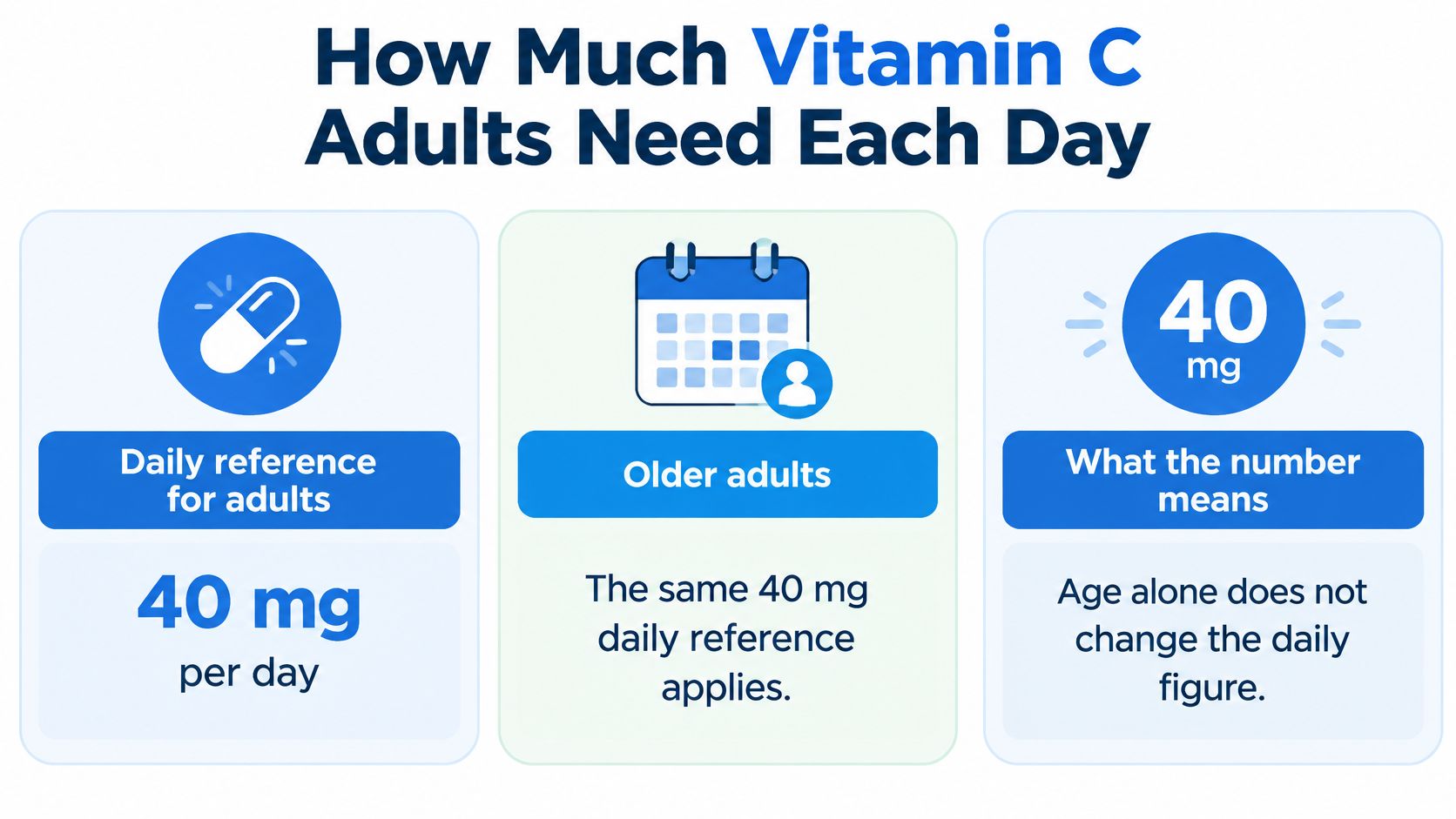
For most UK adults aged 19 to 64, the reference to remember is 40 mg a day. UK guidance uses the same daily reference for older adults, so age alone doesn't mean the target rises. The figure is designed to guide typical intake, not to prescribe a treatment dose.
Other UK reference values answer different questions. Government Dietary Reference Values say 10 mg a day is sufficient to prevent and cure the clinical signs of scurvy. The adult Lower Reference Nutrient Intake is also 10 mg, a level intended to meet the needs of people with low requirements, while the Estimated Average Requirement is 25 mg, the estimated intake that meets the needs of about half a group. The Recommended Nutrient Intake for people aged 15 and over is 40 mg. These are not competing recommendations. Each serves a different purpose. The UK Dietary Reference Values guide explains the distinctions.
What the different figures mean
Think of the 10 mg figure as a minimum reference connected with preventing scurvy, and the 40 mg figure as the recommended intake for everyday nutritional adequacy. A product with a larger dose isn't automatically a better match for your needs. A higher-strength supplement might be relevant in a specific situation, but the label alone can't establish that.
UK reference material also describes how vitamin C levels relate to intake: it begins appearing in blood plasma at around 30 mg per day and reaches a maximum concentration at approximately 70 mg per day. These figures help explain the nutritional basis for the UK recommendation. They don't mean everyone should aim for the higher figure or that more intake will automatically bring more benefit.
Older adults still use the same 40 mg daily reference, but individual circumstances can affect how easy it is to eat a varied diet. For practical help with planning meals, diet resources for new Thermomix owners may offer useful ideas for organising food preparation around your routine.
Food Sources That Deliver Vitamin C Every Day
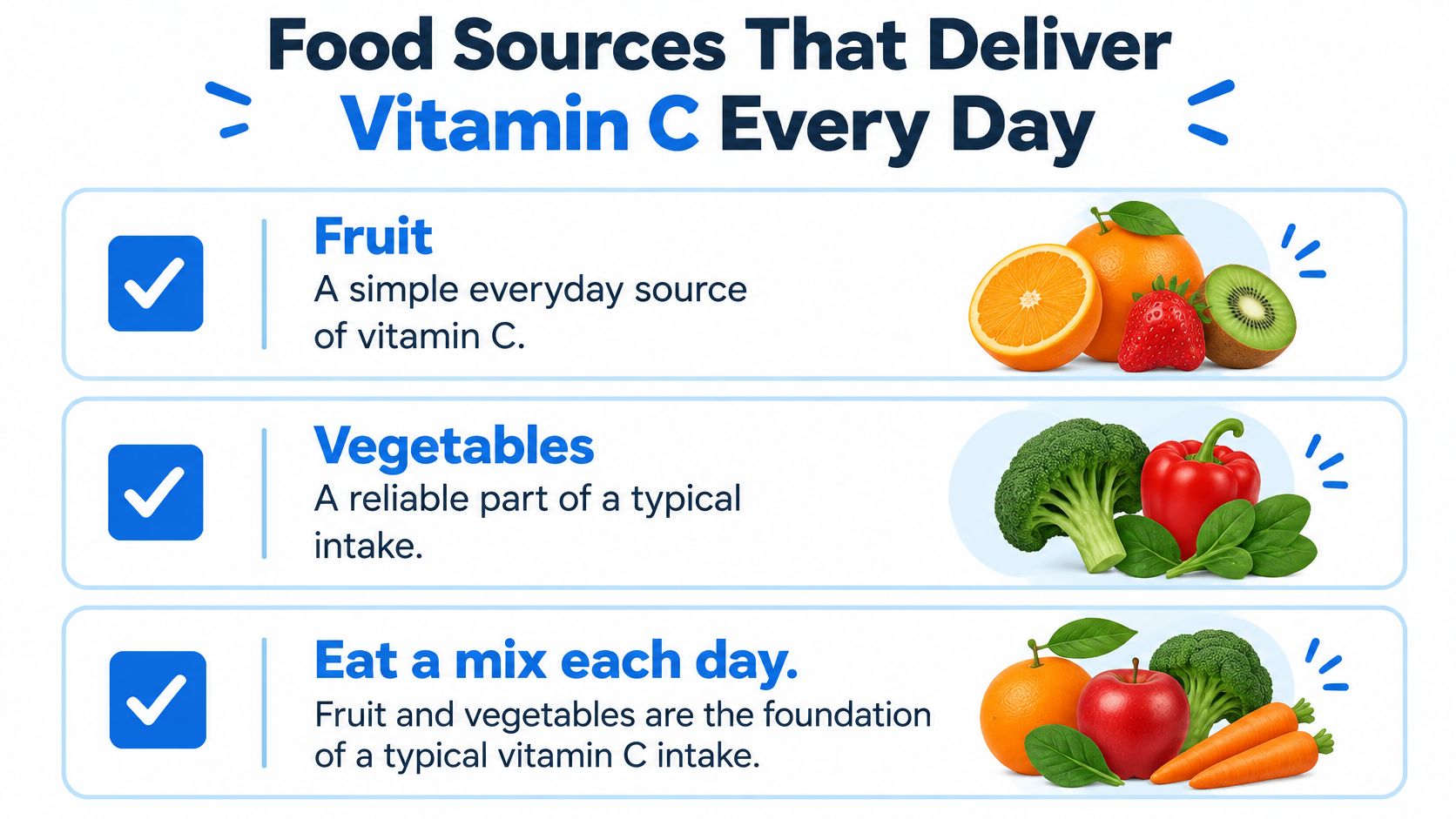
Fruit and vegetables are the foundation of a typical vitamin C intake. Rather than treating a supplement as the default, start by noticing which fresh foods already appear in your meals. Citrus fruit, berries, fresh vegetables and salad items can all help make daily intake part of ordinary eating.
Make it part of meals you already eat
Keep the habit straightforward. Add fruit to breakfast, bring fruit or vegetable sticks into a snack, and include vegetables or salad with lunch and dinner. You don't need to build every meal around one nutrient. A varied pattern makes it easier to include vitamin C without turning food into a calculation exercise.
The daily bank-account analogy is useful here: because the body doesn't keep meaningful reserves of vitamin C, regular meals are the top-ups. A single food choice doesn't need to carry the whole job. Look at the shape of your week, not just one day.
Vitamin C also has a role in iron nutrition because it helps the body absorb iron from food, as described in UK National Diet and Nutrition Survey materials. That makes fruit or vegetables alongside meals a useful part of an overall eating pattern, especially when you're thinking about iron-containing foods.
A simple weekly food audit
At the end of a usual week, ask yourself:
- Fruit at breakfast or as a snack: Did it appear regularly?
- Vegetables with meals: Were they part of your normal lunch or dinner?
- A mix across the week: Did you include both fruit and vegetables, rather than relying on one familiar option?
- Consistency: Were there repeated days when produce was missing altogether?
If your answers show that fruit and vegetables are already a regular part of your meals, food may be doing the job. If they're often absent, consider how to make them easier to include before deciding that a supplement is the only answer.
Who May Need a Closer Look at Their Intake
The choice isn't “everyone needs a supplement” or “nobody does”. UK dietary-modelling results indicate that vitamin C intake exceeds the 30 to 40 mg reference range for many people, and fewer than 2% fall below the Lower Reference Nutrient Intake. But the share below the Estimated Average Requirement was higher among men aged 75 and over, at 10.4%, and girls aged 15 to 18, at 11.5%. Those differences make it more useful to assess a person's circumstances than to apply a single rule to everyone. The UK dietary-modelling study provides the population findings.
Age doesn't automatically change the adult reference, but it can coincide with practical barriers such as low appetite or eating very little. Restricted diets, food insecurity, smoking and illness can also make the usual food-first conversation more complicated. These factors are reasons to look more closely, not proof that a high-dose supplement is needed.
Deficiency remains uncommon, but it can still happen. A 2025 clinical case report described scurvy presenting in disguise, a reminder that poor intake and health concerns shouldn't be dismissed because deficiency is unusual in modern Britain.
Three questions to guide your next step
- Is fruit and vegetable intake consistently low? If so, consider what would make produce easier to include, and whether you need help reviewing your diet.
- Are there factors affecting how much you eat? Older age, low appetite, a restrictive diet or difficulty accessing food may call for a closer conversation about overall nutrition.
- Do you have symptoms or a medical condition that concerns you? Don't try to diagnose a deficiency from a supplement label. Discuss symptoms and health conditions with a clinician.
If you have kidney-health considerations or are weighing a supplement alongside existing health needs, guidance on supplements and kidney health can be a useful starting point for questions to raise with a healthcare professional. The aim is targeted assessment and food-first support, not automatically escalating the dose.
How to Choose a Vitamin C Supplement Dose
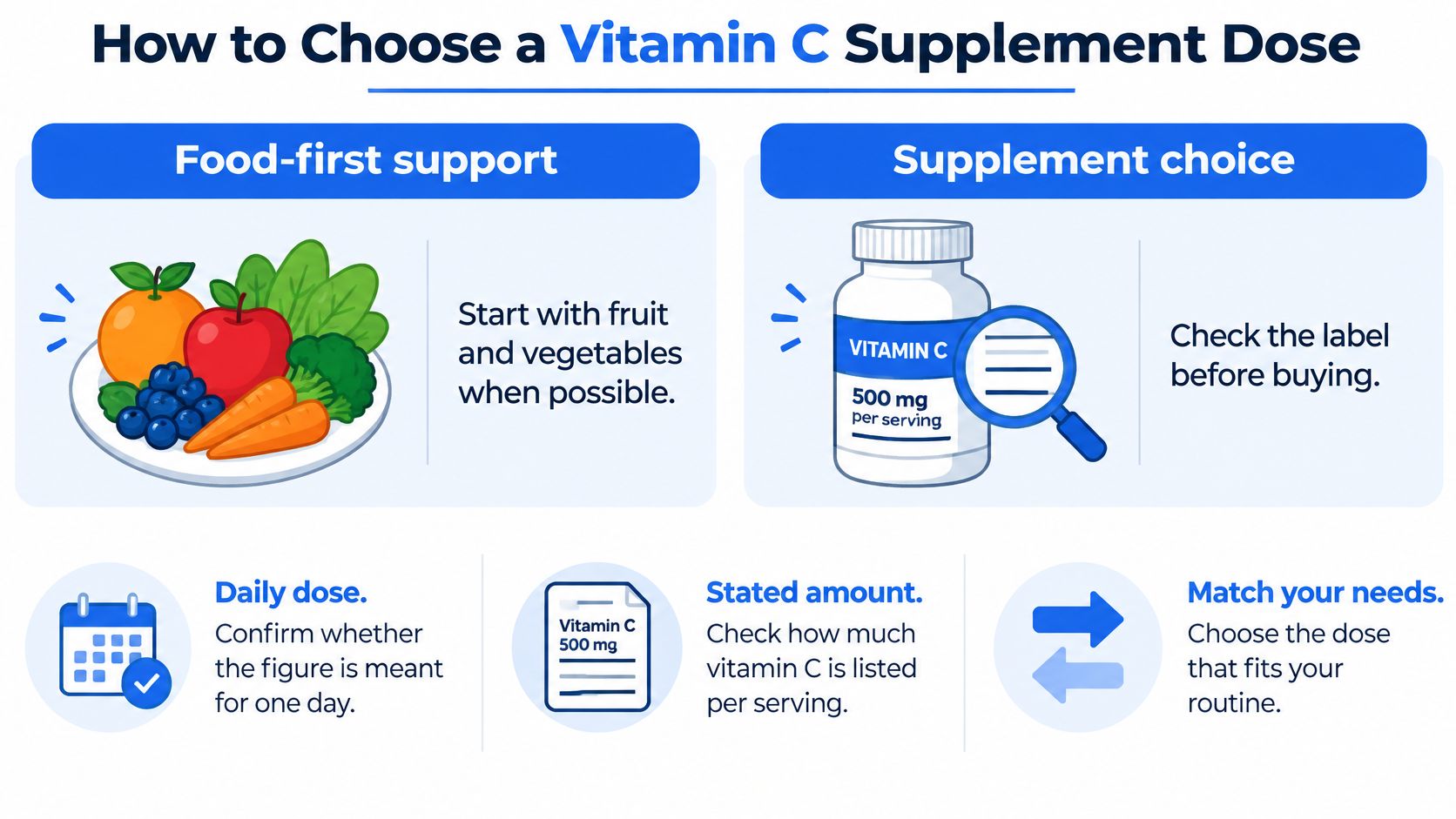
Could a change to your meals meet your needs before you choose a supplement? Daily vitamin C is best treated as a food-first check shaped by your life stage and lifestyle, not a single dose to copy from a product label. If your diet is restricted or a clinician has identified a specific need, a supplement may suit your circumstances. Start by looking at what you eat, then assess whether a product fits your routine.
Read the label, not just the front
Check how much vitamin C is in a serving and what the label means by a serving. Some products show a nutrient reference value for comparison. The 80 mg figure is a UK/EU labelling reference, while the NHS adult recommendation is 40 mg per day. These figures serve different purposes: a label reference helps compare products, while a daily recommendation describes an intake target.
Look at the form of vitamin C, whether the product suits your diet, and whether it includes other nutrients. Iron or another added ingredient may be useful in some circumstances, but a multi-ingredient product is not automatically the right fit. To compare regular and liposomal vitamin C, consider what questions the product format raises, rather than assuming it determines what you need.
Pumpernickel Health Foods offers advice by phone and WhatsApp, along with pre-booked one-to-one consultations with supplement specialists. You can discuss your goals and any relevant contraindications, then compare options without choosing solely by the largest number on the bottle. For a broader way to assess whether a product belongs in your routine, see guidance on deciding whether to take vitamins.
A vitamin D product can illustrate why the serving instructions matter. Vitamin D3 20,000iu Vegicaps provide 500µg (20,000iu) per vegetarian capsule. The serving size and usage instructions on the label, not the number alone, determine how such a product fits into a routine.
Safety Considerations Before Taking Higher Doses
Could a higher dose help, or would it add more to your routine? Start by considering your usual food intake, life stage and reason for taking a supplement. A larger amount does not necessarily bring greater benefit. The adult reference is a guide to nutritional adequacy, not a dose that everyone needs to exceed.

Seek individual advice before changing your intake if you have a health condition, take medication, follow a restricted diet, or have been told by a clinician that you have a specific need. If you already take a multinutrient product, check its ingredients before adding another. Two labels can contribute to the same overall intake, much like ingredients from separate recipes adding up in one meal.
A percentage on a label is a comparison point, not a personal instruction. It shows how a product relates to a nutrient reference value, but cannot determine what is right for you. If you are unsure whether products overlap, this guide to advice on taking too many vitamins can help you prepare questions for a qualified professional.
Before increasing a dose or combining products, pause and ask:
- What is the reason for taking more? A dietary gap or clinician's advice is different from choosing a product because it has the highest dose.
- What else am I taking? Check full ingredient lists, including those of combined products.
- Could my health affect this choice? If you have a condition or take medication, get individual advice first.
A short video below shows how to read a supplement label before deciding whether to change a dose.
Next Steps for Meeting Your Daily Vitamin C Target
Start with a food audit over a typical week. Note whether fruit and vegetables appear regularly, then use the 40 mg daily adult reference as context rather than treating it as a number you must reach with a tablet. If your meals already include a varied selection of produce, a supplement may not be necessary. If intake is repeatedly limited, or a clinician has identified a need, discuss suitable options.
Use the screening questions from earlier to decide what kind of help is relevant. Low produce intake may suggest planning easier meals and snacks; restricted eating, illness or symptoms may call for professional advice. That approach helps you make a decision based on your situation instead of copying a product dose.
At Pumpernickel Health Foods, you can book a free pre-booked one-to-one consultation with a supplement specialist, call or WhatsApp the team on 01234 348179, or visit the Bedford shop at 7 The Arcade. The team can talk through your goals and relevant contraindications before you buy.
Some products combine vitamin C with other nutrients. Spatone Apple with Vitamin C is a naturally sourced liquid iron supplement combining natural iron-rich water from Snowdonia with apple concentrate and vitamin C; its pack contains 28 single-serve 20 ml sachets. HEMA-PLEX Iron Tablets, 30 Count are easy-to-swallow tablets with 42 mg chelated iron, vitamin C, B-vitamins, copper and selenium, with one tablet daily. These are examples of combined products, not a recommendation that everyone needs extra iron or vitamin C.
Bring your food notes and any supplement labels to a conversation with a specialist or clinician. You'll be better placed to choose food-first changes, seek further assessment, or select a product that fits your actual needs.
Visit Pumpernickel Health Foods in Bedford or contact the team by phone or WhatsApp to discuss your usual diet, supplement labels and any health considerations. Book a free one-to-one consultation with a supplement specialist before buying, so you can talk through an option that fits your needs.